Drumming Out Burnout: Why Silicon Valley's Busiest Minds Are Turning to Taiko

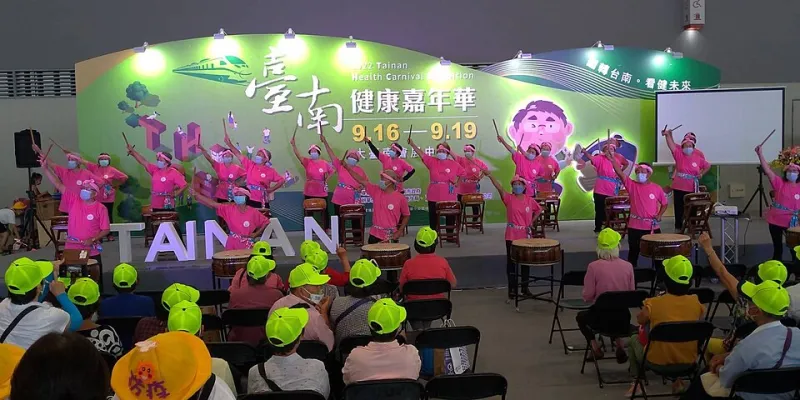
Photo: taiko drumming workshop group professional adults corporate team, via www.gangstarmiragecity.com
There is a particular kind of exhaustion that settles over the Bay Area like coastal fog — persistent, invisible, and difficult to shake. Startup founders, senior engineers, and product leads know it well. It accumulates across back-to-back sprints, all-hands meetings, and the relentless pressure of shipping the next release. For a growing cohort of tech professionals, however, relief is arriving not from a wellness app or a weekend retreat, but from the thunderous, full-body discipline of taiko drumming.
Taiko — a broad term for Japanese percussion traditions that date back more than a thousand years — is quietly becoming one of the most talked-about wellness tools among America's technology workforce. And the reasons, once examined closely, are not difficult to understand.
More Than a Hobby: Taiko as a Full-System Reset
To the uninitiated, taiko might appear to be a performance art best appreciated from the audience. In practice, however, it demands total physical and mental engagement. Proper technique requires a stable, athletic stance, coordinated arm movement, and acute attention to ensemble timing. Practitioners cannot scroll through emails while striking a nagado-daiko. There is no passive participation.
This enforced presence is precisely what draws professionals accustomed to multitasking. Dr. Kenji Watanabe, a San Francisco-based occupational therapist who has studied rhythm-based interventions in corporate settings, describes the effect as "cognitive displacement" — the process by which rhythmic, physically demanding activity interrupts the ruminative thought patterns associated with chronic workplace stress.
"When you are focused on matching a beat in an ensemble, the part of your brain that rehearses tomorrow's board presentation simply cannot operate at the same time," Dr. Watanabe explains. "Taiko is particularly effective because the physical demands are high enough to command full attention, while the ensemble structure adds a layer of social accountability that solo practices like meditation sometimes lack."
Corporate Wellness Programs Take Notice
Several Bay Area companies have begun integrating taiko workshops into their employee wellness programming, often in partnership with established local taiko organizations. San Jose Taiko, one of the oldest and most respected taiko ensembles in the United States, has expanded its community outreach offerings to include corporate workshops designed specifically for non-practitioners.
These sessions typically run between ninety minutes and half a day, introducing participants to foundational rhythms and basic ensemble coordination. According to facilitators who lead these programs, the transformation in group dynamics is frequently immediate and striking.
"We had a product team come in last spring who had been working through a particularly difficult project cycle," recalls one workshop facilitator. "By the end of the session, they were laughing together, listening to each other in a way that felt different from the office. Taiko requires you to hear your teammates — literally. You cannot succeed without them."
This team-building dimension has proven especially compelling for human resources professionals seeking alternatives to conventional corporate retreats. Unlike trust falls or escape rooms, taiko carries cultural weight and artistic legitimacy that participants tend to respect — and retain.
Executive Voices: Finding Focus Through Rhythm
Among those who have moved beyond a single workshop into sustained taiko practice, the testimonials carry a particular consistency. Marcus Leung, a software engineering director at a mid-sized fintech company in Palo Alto, began attending weekly taiko classes at a local dojo eighteen months ago on the recommendation of a colleague.
"I had tried yoga, I had tried cold plunges, I had tried journaling," Leung says. "None of it stuck. Taiko stuck because it is demanding in a way that feels productive. I leave class tired, but it is a clean tired — not the frayed, wired exhaustion I carry home from the office."
Leung notes that the practice has also influenced his professional approach. "There is a concept in taiko called ma — the meaningful space between beats. Learning to value those silences, to trust the pause, has genuinely changed how I run meetings. I listen more. I wait before responding."
This cross-pollination between taiko philosophy and professional conduct surfaces repeatedly in conversations with practitioners. The Japanese concept of ki — vital energy channeled through breath and intention — finds an unexpected parallel in discussions about leadership presence and executive communication.
The Dojo as Sanctuary
Beyond the philosophical resonance, there is something irreducibly physical about taiko's appeal to those who spend their professional lives in front of screens. The drums are large, the mallets are heavy, and the sound is visceral in a way that digital work almost never is. Striking a properly tuned odaiko produces a resonance that practitioners describe as felt throughout the chest and spine.
For knowledge workers whose labor is largely invisible — lines of code, slides, spreadsheets — the immediacy of that physical feedback carries genuine psychological value. You struck the drum. You heard the result. The loop is closed in milliseconds.
Taiko dojos and community centers across the Bay Area — from the Japantown neighborhoods of San Francisco and San Jose to spaces in Oakland and Berkeley — have reported increased enrollment inquiries from working professionals over the past two years. Some attribute this partly to post-pandemic recalibration, as many Americans reassessed how they allocate time and energy. Others point to a broader cultural curiosity about Japanese arts and traditions that has been building steadily across the United States.
What Ancient Practice Offers Modern Ambition
There is a certain irony in the fact that one of the fastest-growing wellness trends in America's most forward-looking industry is rooted in a tradition that predates the printing press. Yet the appeal makes a particular kind of sense. Taiko was never a passive art. It was performed at festivals and ceremonies, in rice fields and on battlefields — it was always connected to collective effort, seasonal rhythm, and community resilience.
Those are not abstract qualities for professionals navigating the volatility of the technology sector. They are precisely the capacities that burnout erodes and that taiko, at its best, helps restore.
For anyone curious about exploring taiko in their own community, Taiko Mu maintains a regularly updated directory of taiko organizations, community classes, and corporate workshop providers across the United States. The beat, as practitioners will tell you, has a way of finding you — if you are willing to listen.