Thunder in the Concert Hall: How Taiko Conquered the American Stage
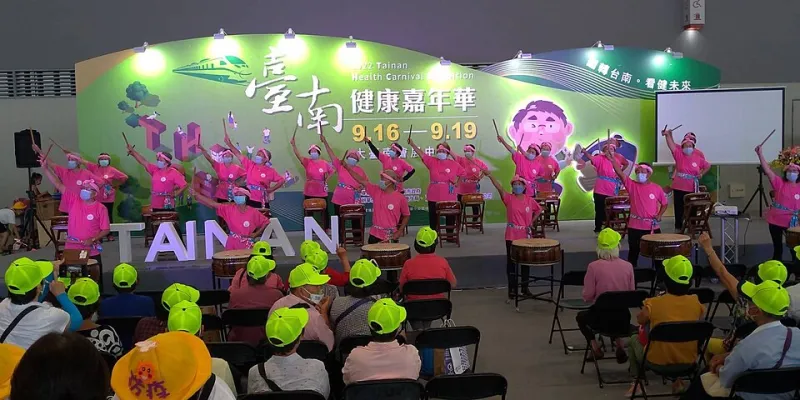
Photo: Tainan City Government, Attribution, via Wikimedia Commons
When Kodo, the legendary taiko ensemble based on Sado Island in Japan, last performed in New York City, tickets sold out within hours of going on sale. The audience at Lincoln Center that evening included seasoned classical music patrons, Japanese American families, college students, and concertgoers who had never previously attended a performance rooted in Japanese tradition. By the final movement — when the ensemble's largest drum sent vibrations through the floor of the concert hall — there was not a still body in the room.
This scene is no longer unusual. Across the United States, taiko has completed a journey from cultural curiosity to concert hall phenomenon that few within the art form's community could have fully anticipated even a decade ago. Understanding how that journey unfolded requires looking at both the art form itself and the American audiences who have chosen to embrace it.
From Community Centers to Carnegie Hall
Taiko's history in the United States begins not in grand venues but in the community halls and Buddhist temples of Japanese American neighborhoods. San Jose Taiko, founded in 1973 in the heart of California's South Bay, is widely credited as one of the first groups to establish taiko as a living, evolving American art form rather than a strictly imported tradition. Soh Daiko in New York City and Taiko Center of the Pacific in Hawaii followed, each developing regional identities while maintaining deep roots in Japanese musical heritage.
For decades, these organizations performed primarily for Japanese American communities, at cultural festivals, and in educational settings. Mainstream American audiences remained largely unaware. The shift began, most observers agree, when touring Japanese companies of exceptional scale and theatrical ambition began making sustained inroads into premier American venues.
Kodo's first major U.S. tour in the 1980s introduced American audiences to taiko at a level of production and artistry that commanded attention beyond ethnic cultural programming. Yamato — The Drummers of Japan, formed in Nara Prefecture in 1993, subsequently brought a more theatrical and visually dynamic approach that proved enormously effective at communicating across cultural and linguistic lines. When Yamato performs, the drums speak a language that requires no translation.
The Spectacle Factor — and What Lies Beneath It
It would be easy — and not entirely inaccurate — to attribute taiko's American success primarily to spectacle. The visual dimensions of a full ensemble performance are genuinely extraordinary. Drummers in traditional or stylized costume, arranged around instruments that range from the compact shime-daiko to the massive odaiko, perform with an athleticism that blurs the boundary between music and dance. The sound levels at a large taiko concert rival those of a rock performance, yet the experience feels categorically different — ancient rather than amplified, communal rather than commercial.
But audience members and cultural critics who engage more deeply with the phenomenon consistently describe something operating beneath the surface spectacle. "There is an emotional directness to taiko that bypasses the usual filters," says one performing arts curator at a major Midwest presenting organization who has programmed taiko ensembles for several consecutive seasons. "Audiences feel it in their bodies before they process it intellectually. That is genuinely rare in live performance."
The concept of kiai — the spirited vocalization that often accompanies drumming, expressing concentrated energy and intention — adds a human dimension that pure instrumental music can sometimes lack. Watching a taiko performer strike a drum with their full physical and vocal commitment is witnessing something that registers as authentically, irreducibly human.
American Taiko Comes Into Its Own
Perhaps the most significant development in recent years has been the maturation of American-born taiko ensembles into nationally recognized performing companies in their own right. Groups such as TAIKOPROJECT in Los Angeles, Mountainside Taiko in Northern California, and Fushu Daiko in Atlanta have developed distinct artistic voices that reflect both Japanese heritage and American experience.
TAIKOPROJECT, in particular, has pushed the boundaries of what taiko performance can encompass, incorporating contemporary choreography, original compositions, and collaborations with artists from hip-hop, jazz, and classical traditions. Their performances have appeared at the Wallis Annenberg Center for the Performing Arts in Beverly Hills and at festivals and venues across the country, attracting audiences who might never have sought out a traditional taiko performance.
This evolution raises meaningful questions about cultural authenticity and artistic ownership — questions the taiko community engages with openly and seriously. The prevailing perspective among leading practitioners is that taiko's vitality in America depends precisely on its capacity to grow through cultural exchange while maintaining rigorous connection to its origins and philosophical foundations.
Must-See Taiko Performances in the US This Year
For readers looking to experience taiko live in 2024 and into 2025, the following ensembles represent some of the most compelling options currently touring or performing in American venues:
Kodo — Japan's most celebrated taiko organization continues to tour North America with programs that balance tradition and innovation. Check their official schedule for West and East Coast dates.
Yamato — The Drummers of Japan — Consistently one of the highest-energy taiko experiences available to American audiences, Yamato's theatrical approach makes their performances ideal for first-time attendees.
TAIKOPROJECT — Based in Los Angeles, this ensemble offers some of the most contemporary and artistically adventurous taiko programming in the country. Particularly recommended for audiences interested in the intersection of Japanese tradition and American creative culture.
San Jose Taiko — A living institution of American taiko, their performances carry historical significance alongside genuine artistic excellence. Their home performances in the Bay Area are essential viewing.
Soh Daiko — New York City's foundational taiko ensemble remains one of the East Coast's most important performing organizations, with regular appearances at cultural institutions throughout the metropolitan area.
Why This Moment Matters
The commercial success of taiko in American concert halls is not merely an entertainment story. It reflects a broader pattern of American audiences seeking live performance experiences that are immersive, physically engaging, and culturally substantive — experiences that a screen cannot replicate and an algorithm cannot recommend with the same authority as a friend who attended and was genuinely moved.
Taiko offers all of those qualities, and something more: a reminder that rhythm is one of the oldest forms of human communication, capable of crossing every boundary that language and geography impose. When the great drum sounds in a darkened American concert hall, something older than any nation or cultural border resonates in the room.
That, perhaps more than any marketing campaign or trend cycle, explains why audiences keep returning — and why the halls keep filling.
Taiko Mu provides ongoing coverage of taiko performance events, ensemble profiles, and cultural programming across the United States. Visit taikamu.com for our full events calendar and performance reviews.