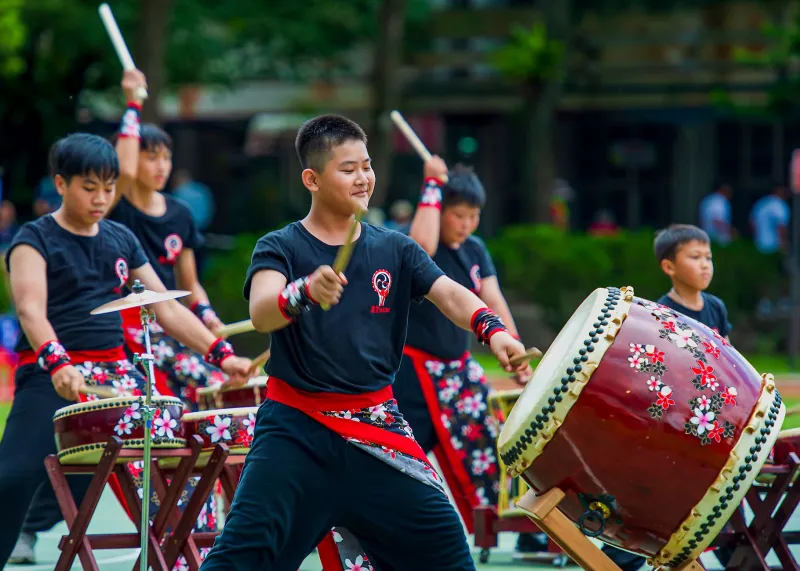
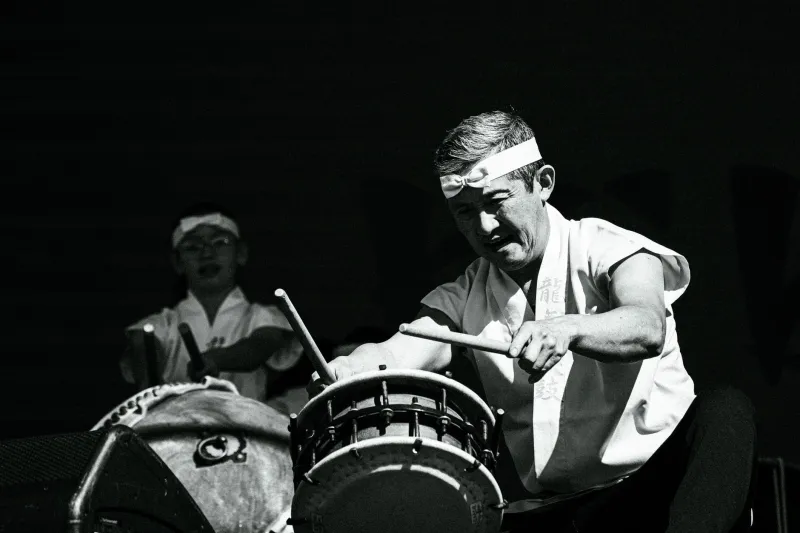
Strike for Change: How Taiko Ensembles Are Drumming at the Frontlines of American Social Movements
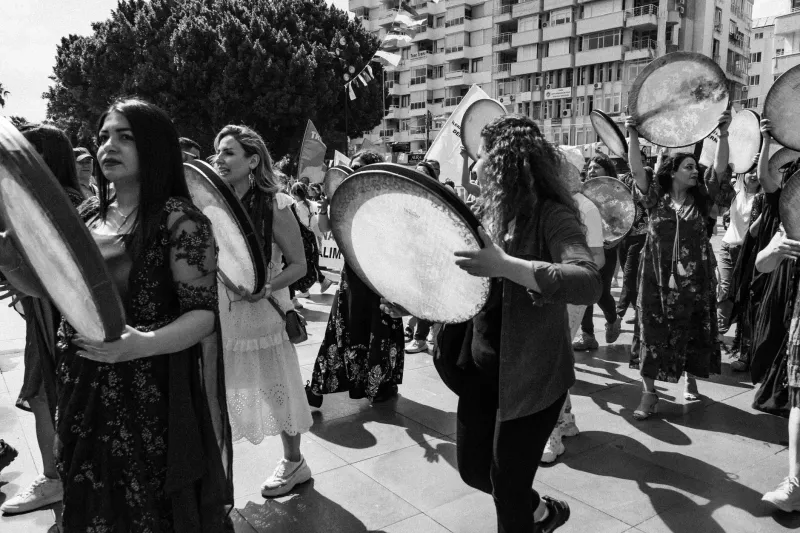
There is something almost primal about the sound of a taiko drum reverberating through a crowded city street. The low, percussive boom does not merely ask for attention — it commands it. In recent years, an increasing number of taiko ensembles across the United States have recognized that quality, and they have carried it directly into the arena of social and political protest.
From the fog-laced avenues of San Francisco to the broad boulevards of Chicago, taiko groups are appearing at climate demonstrations, immigration rights marches, labor strikes, and racial justice gatherings. Their presence is neither incidental nor decorative. For many of these drummers, the act of striking the drum in a public space charged with collective purpose represents a deliberate extension of the art form's deepest values.
A Tradition with Roots in Resistance
To understand why taiko feels so at home in protest spaces, it helps to revisit the instrument's history in the United States. Taiko as an organized ensemble practice in America emerged in the late 1960s, a period of profound social upheaval. San Francisco Taiko Dojo, widely regarded as the first dedicated taiko school in the Western world, was founded in 1968 — the same year as the assassination of Robert F. Kennedy and the height of the anti-Vietnam War movement.
Early American taiko practitioners were frequently members of Japanese American communities still processing the trauma of wartime incarceration. The drum, for them, was not merely a musical instrument. It was a reclamation — of cultural identity, of dignity, of voice. That origin story has never fully left the art form, and contemporary ensembles are increasingly explicit about honoring it.
"When we play at a march, we are not doing something new," says Keiko Tanaka, a lead drummer with a Bay Area ensemble that has performed at multiple climate rallies in recent years. "We are doing something very old. The drum has always been a way of saying: we are here, and we will not be quiet."
The Psychology of Collective Percussion
Activists and social movement scholars have long understood that music plays a critical role in sustaining protest energy. What taiko brings to that equation, however, is distinctive. Unlike a chant or a song, which requires verbal language and therefore a shared linguistic code, the drum communicates through the body itself.
Research in social psychology suggests that synchronized physical activity — marching together, clapping in unison, or drumming in coordinated patterns — produces measurable increases in group cohesion and a phenomenon sometimes described as "self-other merging," in which individual participants begin to feel a deepened sense of connection to those around them. Taiko, with its demanding requirement for precise collective timing, may be one of the most potent available vehicles for that effect.
Dr. Marcus Webb, a sociologist at a Midwestern university who studies music and collective action, has observed taiko performances at several demonstrations over the past three years. "What I notice is how the crowd responds differently to the drums than to speeches or amplified music," he explains. "There is a kind of physical entrainment that happens. People's bodies begin to synchronize. That is not a metaphor — it is a measurable neurological and physiological event. And it matters enormously for building the sense of solidarity that sustains a movement."
Crossing Movement Lines
One of the more remarkable aspects of taiko's emergence as a protest instrument is its apparent capacity to travel across the boundaries of different social movements. In Los Angeles, members of a taiko ensemble performed at both a farmworkers' solidarity rally organized by Latino labor advocates and a demonstration marking the anniversary of Japanese American incarceration. In Seattle, a university taiko club participated in a climate strike alongside Indigenous-led environmental organizations.
That cross-movement fluidity is not accidental. Many ensemble directors speak deliberately about taiko as a form of cultural bridgework — a practice rooted in Japanese and Japanese American experience that nonetheless carries a resonance broad enough to speak across communities.
"We were invited to play at a rally organized primarily by Black and Latino activists," recalls Daniel Orozco, a non-Japanese American member of a Chicago-based taiko group. "At first, some of us wondered whether our presence was appropriate — whether we were inserting ourselves somewhere we didn't belong. But the organizers were very clear. They wanted the drum because of what it does to a crowd. And they wanted us because they knew our group's history of showing up for multiple communities. That conversation itself was part of the solidarity."
The Weight of the Drum in Public Space
Playing taiko in a protest setting is not without its complications. Ensemble directors frequently navigate questions about institutional neutrality, the political views of individual members, and the risk of the art form being reduced to a prop rather than honored as a living practice.
Some groups have developed explicit internal guidelines. One East Coast ensemble, which asked not to be identified by name, maintains a written policy requiring that any public performance at a political gathering be approved by a consensus of its membership, and that the group always be identified as a taiko ensemble rather than as endorsers of any particular organization.
"We are not a political party," explains the ensemble's artistic director. "We are a taiko group. When we play at a demonstration, we are lending the power of the drum to a cause that our members have collectively decided aligns with our values. That distinction matters to us. The drum is not a billboard. It is a voice, and we are responsible for how we use it."
Thunder as Testimony
For the drummers themselves, the experience of performing in a protest setting is often described as qualitatively different from concert performance — more exposed, more urgent, and paradoxically more connected to what they feel taiko is fundamentally about.
"In a concert hall, people are watching you," says Tanaka. "At a march, people are with you. The drum is not separate from the crowd. It is part of it. The sound belongs to everyone there."
That sense of shared ownership may be precisely what makes taiko so well suited to the emotional and communal demands of public demonstration. The art form asks its practitioners to subordinate individual expression to collective precision — a discipline that mirrors, in physical form, the very principle at the heart of organized social movements.
As American public life continues to generate moments that call communities into the streets, it seems likely that the taiko drum will continue to find its place among them — not as an accessory to protest, but as one of its most ancient and enduring instruments.
The thunder, after all, has always belonged to those willing to strike.