Feeling the Thunder: How Deaf and Hard-of-Hearing Drummers Are Redefining What It Means to Play Taiko
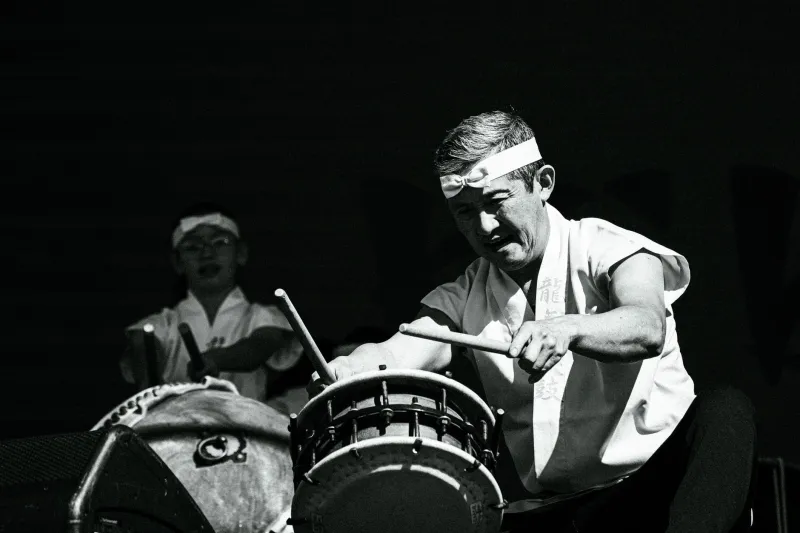
In a rehearsal studio in Los Angeles, a woman places both palms flat against the skin of a nagado-daiko before she raises a bachi. She is not warming up. She is listening — not with her ears, but with every nerve ending in her hands. For this drummer, vibration is not a supplement to sound. It is sound.
Across the United States, a quiet but consequential shift is taking place within the taiko community. Deaf and hard-of-hearing drummers are stepping into circles traditionally organized around auditory cues, and in doing so, they are exposing just how much the art form has always communicated beyond the boundaries of sound. Their presence is provoking meaningful conversations about access, artistry, and the very nature of percussion itself.
The Body as an Instrument of Perception
Taiko, at its core, is a physical discipline. The force required to produce sound from a large drum transmits energy not only into the air but into every surface it touches — the floor, the frame, the performer's own body. For hearing practitioners, this somatic dimension often registers as an enhancement to the auditory experience. For Deaf and hard-of-hearing players, it becomes the primary channel through which rhythm is understood and expressed.
Rooted in this reality, several taiko groups in cities including San Francisco, Seattle, and Chicago have begun developing what practitioners describe as vibration-centered pedagogy. Rather than relying exclusively on spoken or auditory instruction, these approaches incorporate tactile demonstrations, visual conducting systems, and floor surfaces specifically chosen for their resonant properties. Some ensembles have introduced translucent drum heads that allow players to observe the physical oscillation of the drumhead as they strike — a visual confirmation of the rhythmic pattern they are producing.
The implications extend well beyond accommodation. Instructors who have worked with Deaf students consistently report that the process of developing vibration-based teaching methods has deepened their own understanding of taiko's physical mechanics. In attempting to articulate what hearing students absorb intuitively, these teachers have been compelled to examine the art form with greater precision.
American Sign Language and the Visual Grammar of Ensemble
One of the more innovative developments emerging from this movement is the integration of American Sign Language — and more broadly, visual spatial communication — into ensemble coordination. Traditional taiko groups rely on a combination of verbal calls, eye contact, and sonic cues to synchronize transitions, tempo shifts, and choreographic movements. When Deaf musicians enter these ensembles, the group must develop a visual grammar capable of conveying the same information.
Some ensembles have begun working with ASL interpreters not only during performances for public audiences but within the rehearsal process itself. Others have created ensemble-specific signing systems — shorthand visual signals that communicate structural cues such as entry points, dynamic changes, and closing sequences. Far from being a logistical workaround, these systems have introduced a new layer of visual expressiveness to performances that hearing audiences often find compelling even without understanding their precise meaning.
At a 2023 performance in Portland, Oregon, one mixed ensemble drew particular attention for the fluid visual communication visible among its members throughout the set. Several audience members later described the experience as unusually immersive — noting that watching the performers signal to one another added a dimension of transparency and connection that felt distinct from conventional taiko concerts.
Dismantling Assumptions Within the Tradition
The participation of Deaf and hard-of-hearing drummers has not been without friction. Taiko carries a deep cultural inheritance, and within some communities, there exists a sensitivity around modifications that might be perceived as departing from established forms. Questions have arisen about whether vibration-based practice constitutes a genuinely equivalent engagement with the tradition, or whether something essential is altered in the translation.
These are legitimate questions, and the Deaf taiko community has largely engaged with them directly rather than dismissing them. Many practitioners point to the historical breadth of taiko itself — a tradition that encompasses ceremonial, theatrical, agricultural, and contemporary forms across a wide range of Japanese regional contexts — as evidence that the art form has always accommodated reinvention. Others note that taiko's transmission to the United States was itself a profound act of creative adaptation, one that produced distinctly American ensembles whose relationship to the tradition differs substantially from their Japanese counterparts.
What is harder to dispute is the effect that Deaf participation has had on the broader community's self-understanding. Ensembles that have worked alongside Deaf drummers frequently describe a renewed attentiveness to the physical and visual dimensions of their own practice. Hearing players report becoming more aware of how their bodies absorb and respond to vibration, and more deliberate about the visual presentation of their performance.
Building Infrastructure for Accessibility
Beyond individual ensembles, a nascent infrastructure is beginning to take shape around Deaf and hard-of-hearing taiko participation in the United States. Several national taiko organizations have incorporated accessibility workshops into their conference programming, offering sessions on visual instruction methods, vibration-based learning, and inclusive ensemble design. Online communities have emerged where Deaf drummers exchange resources and connect with instructors experienced in adaptive pedagogy.
Notably, a small number of university taiko programs — institutions that have historically served as important incubators for the art form's American development — have begun formally integrating accessibility frameworks into their curricula. These programs are training a generation of taiko educators who will carry inclusive practices into communities across the country.
Funding bodies that support Japanese cultural programming in the United States have also begun to recognize accessibility as a dimension of cultural stewardship. Grants specifically addressing adaptive arts programming have enabled some ensembles to invest in equipment modifications, interpreter services, and the development of written instructional materials that translate oral teaching traditions into formats accessible to a wider range of learners.
A Richer Understanding of an Ancient Art
There is something philosophically resonant about the fact that an art form built around the production of sound is being expanded and deepened by practitioners who experience it primarily through means other than hearing. Taiko has always been described, even by hearing practitioners, as something felt as much as heard — a force that moves through the body, that connects performers to one another and to the earth beneath them.
Deaf and hard-of-hearing drummers are not importing this understanding from outside the tradition. They are revealing something that was always present within it. In doing so, they are offering the broader taiko community a more complete picture of what the drum has always been capable of communicating.
For American taiko — still a relatively young tradition, still in active dialogue with questions of identity, belonging, and purpose — this development carries particular significance. A community that has long asked who taiko is for, and what it means to carry a Japanese tradition on American soil, is now confronting a deeper version of the same question: what does it mean to hear the drum at all? The answers emerging from Deaf and hard-of-hearing practitioners suggest that the tradition is larger, more generous, and more resilient than any single mode of perception can contain.