Crossing the Pacific, Carrying the Drum: How Japanese Exchange Students Are Reshaping Taiko in America
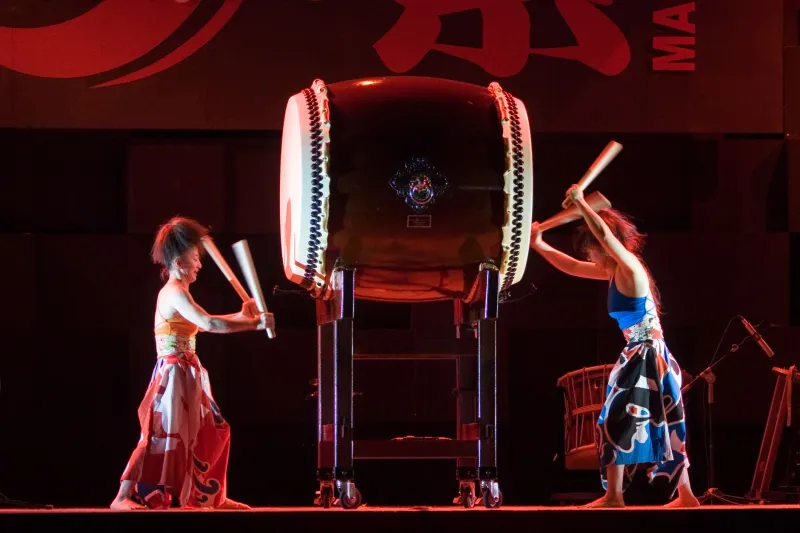
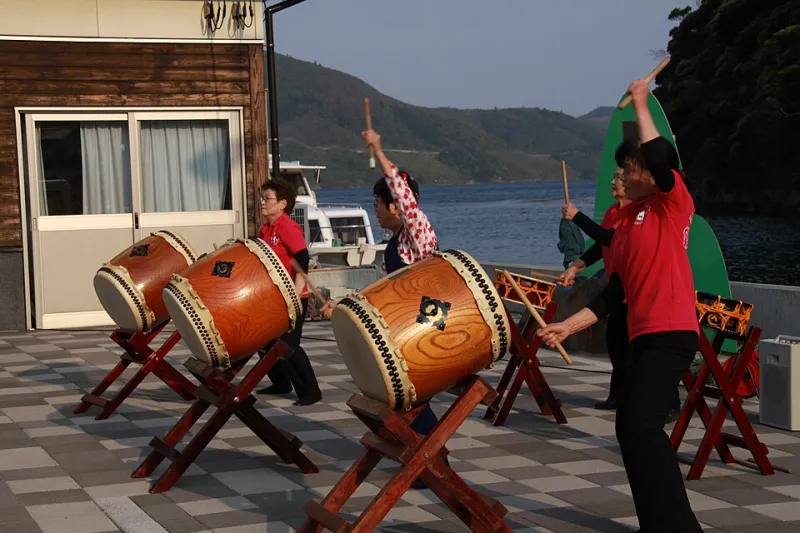
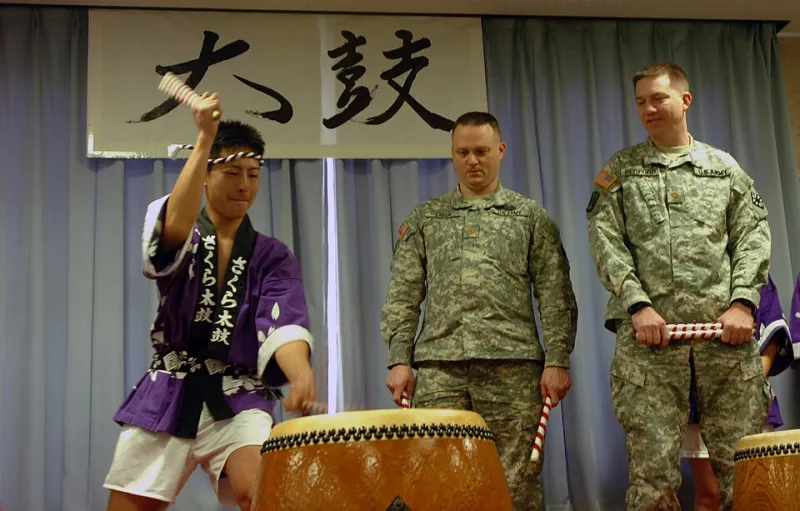
On a Tuesday evening in a converted warehouse space in Portland, Oregon, the air carries the unmistakable resonance of a nagado-daiko being struck with precise, deliberate force. The player is twenty-two-year-old Kenji Murakami, a university exchange student from Osaka who arrived in the United States four months ago carrying two bachi and a notebook dense with hand-notated rhythmic patterns his sensei had passed down over a decade of training. Surrounding him is a semicircle of American practitioners ranging in age from sixteen to fifty-four, watching his hands with focused attention.
This scene — part lesson, part cultural negotiation, part living archive — is playing out with increasing frequency across American cities. As formal and informal exchange programs continue to bring Japanese taiko students into American communities, a quiet but consequential transformation is underway on both sides of the Pacific.
More Than Technique: What Exchange Students Actually Carry
It would be a mistake to characterize what exchange students like Murakami offer as purely technical instruction. Certainly, their training often reflects years of immersion in regional styles — the powerful, grounded stances of Kodo-influenced practice, the intricate layered polyrhythms of festival-derived folk traditions, or the meditative precision of Buddhist ceremonial drumming. But seasoned ensemble directors across the country will tell you that the most significant contribution is harder to quantify.
"What Yuki brought us was context," says Diana Reyes, artistic director of a taiko ensemble based in the San Francisco Bay Area, referring to a student who spent eight months with her group through a university partnership program. "She could explain why a particular kata existed, what ceremony it was born from, what the body is meant to feel during that movement. That kind of embedded knowledge doesn't come from a workshop weekend or a YouTube tutorial."
This transmission of contextual meaning — what ethnomusicologists sometimes call "embodied knowledge" — is precisely what many American ensembles have found difficult to access through conventional channels. Books and videos can document form, but they cannot easily convey the cultural logic that gives form its meaning.
The Architecture of Exchange
The pathways through which Japanese students arrive in American taiko communities are varied and often informal. Some come through university exchange agreements between American institutions and Japanese schools with active taiko programs. Others arrive as part of broader cultural diplomacy initiatives supported by organizations such as the Japan Foundation or the US-Japan Council. Still others find their way into local ensembles through personal connections, social media, or the growing network of taiko practitioners who maintain relationships across both countries.
What these arrangements share is a fundamental asymmetry — at least at the outset. Japanese students typically arrive with deep institutional training, while American host ensembles bring something arguably equally valuable: creative latitude, stylistic diversity, and an interpretive freedom that the more formalized structures of Japanese taiko culture do not always permit.
"In Japan, there is tremendous respect for the established form," explains Hiroshi Tanaka, a graduate student from Fukuoka currently in residence with an ensemble in Chicago. "Here, I have seen groups combine taiko with jazz, with hip-hop, with modern dance. At first it was surprising. Then I realized it was a kind of courage."
That observation — framing American innovation as courage rather than deviation — speaks to a shift in perspective that many exchange participants report experiencing over the course of their time in the United States.
American Taiko Through Japanese Eyes
For many exchange students, arriving in America means encountering a version of taiko that has evolved in ways both recognizable and genuinely foreign. American ensembles, particularly those founded during the Asian American civil rights movements of the late 1960s and 1970s, developed taiko not simply as cultural preservation but as political and communal expression. That historical DNA remains present in many groups today, shaping everything from repertoire choices to the demographics of who is welcomed into the ensemble.
"I did not expect taiko here to be so connected to identity politics," says Murakami. "In Japan, taiko is community and festival and tradition. Here, it is also about who you are allowed to be. That is a different kind of power."
Host ensemble directors note that this perspective shift works in multiple directions. When Japanese students observe American practitioners — many of whom have no ancestral connection to Japan — performing taiko with evident commitment and emotional investment, it frequently prompts a reconsideration of what the art form actually belongs to, and who has the right to carry it forward.
"One of our exchange students told me that watching our ensemble perform made her think about taiko differently," recalls Marcus Webb, director of a university-affiliated ensemble in Austin, Texas. "She said she had always thought of it as Japanese. After being here, she started thinking of it as human. That's not a small thing."
What Returns Across the Ocean
The exchange, of course, does not conclude when a student boards a flight back to Japan. The experiences accumulated during months of immersion in American taiko culture return with them, and the ripple effects — while difficult to trace systematically — are beginning to attract attention from cultural researchers and ensemble leaders in Japan.
Some returning students have introduced American compositional approaches into their home ensembles, incorporating melodic instruments, spoken word, or unconventional staging. Others have brought back a more expansive understanding of who taiko is for, advocating within their communities for greater inclusivity in performance and instruction. A few have established their own exchange connections, actively recruiting American practitioners to visit Japan and teach.
"The pipeline runs both ways," says Dr. Emi Yoshida, a cultural studies researcher at a California university who has spent several years documenting these exchanges. "What we are witnessing is not Japan exporting taiko to America. It is a genuine dialogue, and both traditions are being changed by it."
The Challenge of Continuity
Not every exchange unfolds smoothly. Language barriers, differences in pedagogical philosophy, and the inherent brevity of most exchange programs all present real challenges. Some ensemble directors express concern that short residencies — often just a single semester — can create dependency without building lasting capacity. Students arrive, impart knowledge, and depart, sometimes leaving ensembles uncertain about how to sustain what they have learned.
Addressing this, several organizations are experimenting with longer-term arrangements, multi-year partnerships, and digital follow-up programs that allow exchange relationships to persist beyond the physical residency. Video consultations, shared notation archives, and co-composed pieces that require ongoing collaboration are among the tools being tested.
"The goal is not just a visit," says Reyes. "The goal is a relationship that keeps producing."
A Living Tradition in Motion
What emerges from conversations with exchange students, host directors, and cultural researchers is a portrait of taiko not as a fixed artifact being carefully transported across borders, but as a living tradition in active negotiation with the communities it enters. Japanese exchange students are neither ambassadors of an immutable past nor passive observers of American reinvention. They are participants in an ongoing conversation about what taiko is, what it can become, and who it ultimately serves.
Back in Portland, Murakami finishes a long practice session and sets down his bachi. When asked what he will take home to Japan, he is quiet for a moment.
"The music," he says finally. "But also the way people here play like it matters to them personally. Like it is theirs. I want to remember that feeling."
In that sentiment lies perhaps the most significant thing the exchange produces: not the transfer of technique, but the mutual recognition that taiko, wherever it is played, belongs most fully to those who give themselves to it.