Crossing the Threshold: American Taiko Drummers Who Journeyed to Japan and Returned Forever Changed
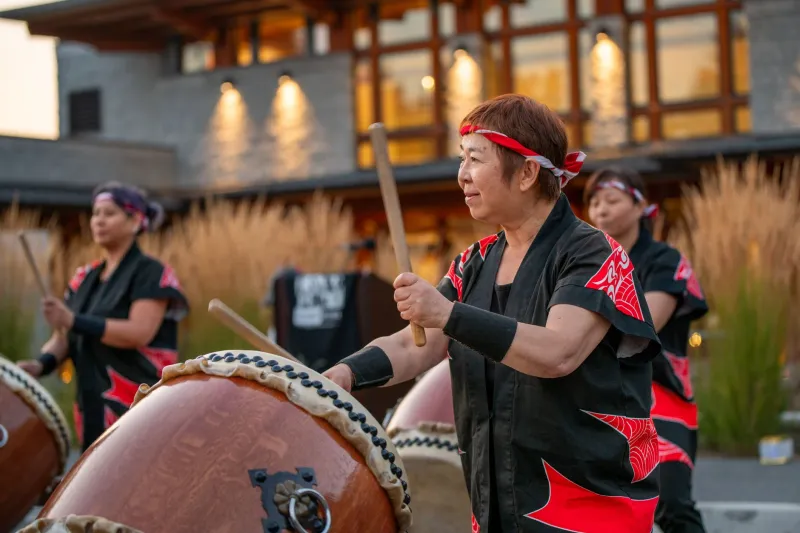
For many American taiko drummers, the moment arrives quietly — somewhere between a late-night rehearsal and a performance that felt technically precise yet emotionally hollow. The technique is there. The ensemble is cohesive. And yet something essential seems to hover just beyond reach, as though the drum is speaking a language they have only partially learned. For a growing number of practitioners across the United States, the answer to that unspoken question lies not in another workshop or masterclass held stateside, but in Japan itself.
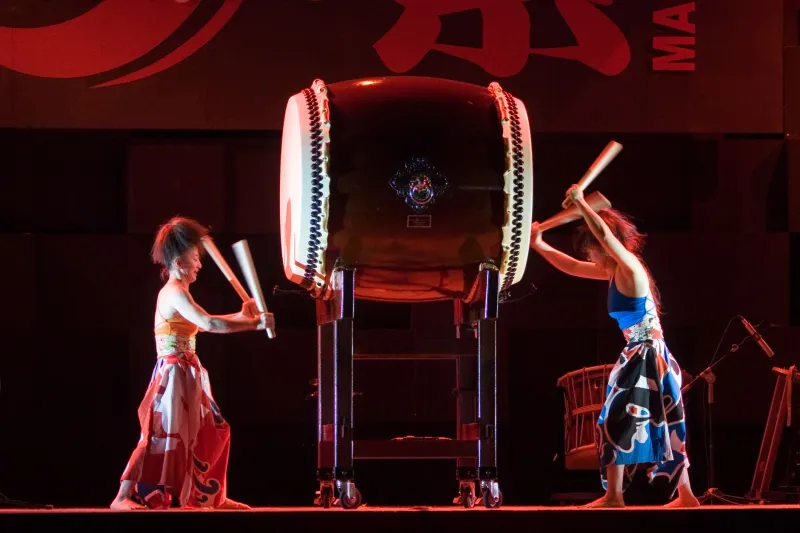
The phenomenon of American taiko enthusiasts making deliberate pilgrimages to train in Japan has gained considerable momentum over the past decade. What was once a rare undertaking — reserved for professional performers or those with deep institutional connections — has become an increasingly accessible aspiration for dedicated amateurs and semi-professional drummers alike. They travel to places like Sado Island, home to the legendary Kodo ensemble and its demanding apprentice program; to Oguchi in Nagano Prefecture, widely regarded as the birthplace of modern kumidaiko, the ensemble style that defines much of what Americans recognize as taiko today; and to regional festival circuits where drumming traditions have been maintained without interruption for centuries.
What Draws Them Across the Pacific
The motivations are as varied as the drummers themselves. Kenji Hartwell, a Seattle-based taiko instructor who made his first trip to Japan seven years ago, describes his impetus in straightforward terms. "I had been teaching for four years, and I realized I was transmitting a version of taiko that had passed through several sets of hands before reaching me," he explains. "I wanted to go back to the well — not to invalidate what I had learned, but to understand what had been filtered out along the way."
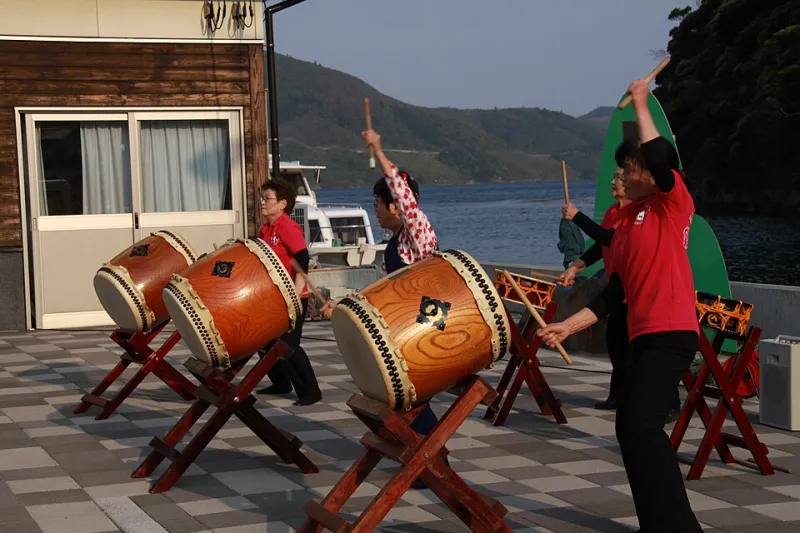
For others, the journey is less about technical refinement and more about cultural comprehension. Maya Lindström, who plays with a community ensemble in the San Francisco Bay Area, spent three weeks in Japan attending regional matsuri, or festivals, where taiko serves not as performance art but as ritual function. "In America, we often talk about taiko's spiritual dimensions, but we're talking about them in the abstract," she says. "Being in a small village in Niigata Prefecture and watching elderly men carry a mikoshi through the streets while drums anchored the entire procession — that was the first time I truly felt what we mean when we say taiko connects to something larger than the player."
The Kodo Experience and the Rigor It Demands
Among the various training pathways available to visiting American drummers, few carry the cultural weight of Kodo's programs on Sado Island. The ensemble — internationally celebrated and deeply committed to taiko's preservation and evolution — offers structured opportunities for outside students, though these experiences are far from casual. Participants are expected to engage fully with the physical and philosophical demands of Kodo's approach, which includes early morning runs, communal labor, and a cultivation of what the ensemble calls "the whole person" rather than merely the skilled technician.
Drummers who have completed such programs consistently report that the physical challenge is secondary to the perceptual shift it produces. "I thought I was going to learn better technique," recalls Daniel Okafor, a Chicago-based drummer who completed a short-term residency program affiliated with Kodo's educational outreach. "What I actually learned was how to listen differently. The drum stopped being an instrument I played and started being something I was in conversation with."
That reorientation — from performer to participant in a larger dialogue — appears frequently in the accounts of returning American drummers, regardless of where in Japan they trained.
Villages, Festivals, and the Living Archive
Beyond formal programs, many American drummers pursue less structured immersion, attending regional festivals and seeking informal mentorship from local masters who rarely appear on international stages. This approach requires patience, language preparation, and a willingness to occupy the position of genuine beginner — a posture that experienced American drummers sometimes find disorienting.
"There is a humility that Japan demands of you," says Hartwell. "Not because anyone is unkind, but because you are suddenly surrounded by people for whom this tradition is simply life. It is not a cultural project or a community-building exercise. It just is. And you realize very quickly how much scaffolding we have built around taiko in America to explain it and justify it and contextualize it."
That scaffolding, many returning drummers note, is not without value. The American taiko tradition — born largely from the social justice movements of the 1960s and shaped by Japanese-American communities navigating questions of identity and belonging — has produced something genuinely distinct from its Japanese counterpart. The pilgrimage to Japan, paradoxically, often deepens a drummer's appreciation for what has been created on American soil.
Coming Home: Integration and Transformation
The return journey is its own passage. American drummers who have trained in Japan frequently describe a period of disorientation upon coming home — a sense that their practice must be rebuilt rather than simply resumed. Ensembles sometimes notice the change before the returning drummer can fully articulate it.
"My group said I was playing with more space," recalls Lindström. "I wasn't trying to fill every moment. I had learned to trust the silence between strikes, which is something I had been told about intellectually but had never actually felt until I heard it demonstrated in a context where it was completely natural."
For instructors, the integration process carries additional responsibility. Hartwell has spent years developing what he describes as a "translation practice" — a deliberate effort to bring insights from his Japanese training into an American context without erasing either tradition's integrity. "You cannot simply transplant what you experienced," he says. "You have to digest it and let it become part of how you understand the art. Then you share that understanding, not the raw experience."
A Pilgrimage Without End
What strikes those who have made the journey most forcefully is the recognition that it is not a destination but an orientation — a commitment to approaching taiko with the perpetual openness of a student rather than the settled confidence of an expert. Japan offers American drummers not a correction but a deepening: a reminder that beneath every technical achievement and every powerful ensemble performance lies a tradition of extraordinary depth, still largely unexplored by those encountering it from across the Pacific.
The drum, as these practitioners have discovered, is not merely an instrument to be mastered. It is a conversation that spans centuries, cultures, and oceans — and the most honest thing any American taiko player can say is that they are still learning how to listen.