The Drum as Declaration: How Taiko Became a Voice for Asian-American Resistance and Belonging
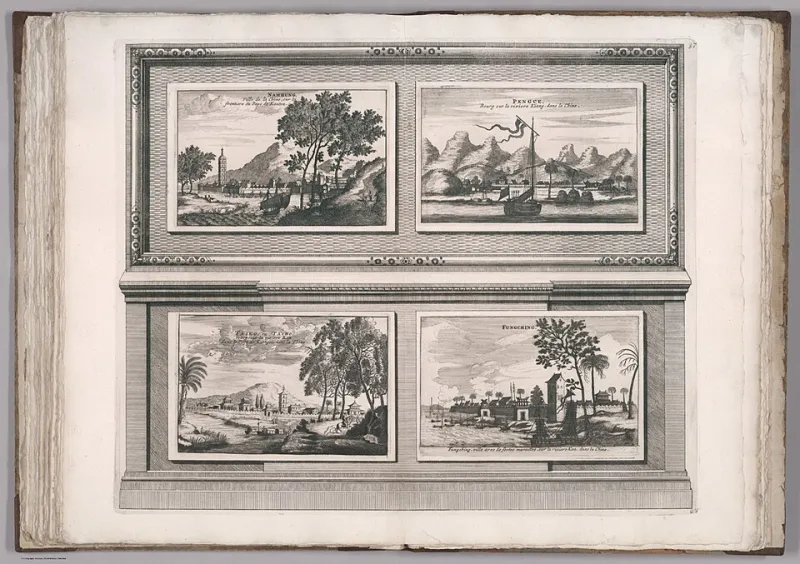
Photo: Aa, Pieter van der, 1659-1733, Public domain, via Wikimedia Commons
There is a particular quality to the sound of a taiko drum struck with full intention in a public space. It does not ask for attention. It commands it. That quality — assertive, undeniable, impossible to dismiss — has made taiko drumming something more than an art form for many Asian-Americans. It has made it a statement.
This is not an accident of acoustics. It is the result of a deliberate, decades-long project undertaken by communities that understood, often from lived experience, what it means to be rendered invisible — and what it means to refuse that erasure.
Origins in Resistance
The story of taiko in America cannot be told honestly without acknowledging the specific historical circumstances that shaped it. San Jose Taiko, founded in 1973 in the heart of California's Japanese-American community, emerged directly from the social ferment of the civil rights era and the redress movement seeking recognition for Japanese-American incarceration during World War II. Its founders were not simply preserving a cultural form — they were asserting that Japanese-American culture was worth preserving, that it carried dignity and power, and that it belonged in American public life.
That founding impulse — the drum as an instrument of self-definition — has never fully left the American taiko tradition. It runs beneath the surface of countless ensembles, informing the repertoire they choose, the communities they serve, and the causes they lend their presence to.
Rhythm at the Rally
In recent years, that undercurrent has risen dramatically to the surface. Following a marked rise in anti-Asian violence in 2020 and 2021 — a crisis that forced a painful national reckoning with the depth of anti-Asian racism in American life — taiko ensembles appeared at vigils, rallies, and community gatherings across the country. Their presence was not incidental.
In cities including New York, Los Angeles, Seattle, and Atlanta, drummers brought their instruments to public spaces and played. The choice carried symbolic weight that was immediately legible to those who understood the tradition's history. Taiko, after all, was born partly from a refusal to be silent. Its reappearance in moments of communal grief and anger carried that memory forward.
"When we play at an event like that, we're not performing," one Bay Area drummer has noted in community discussions about the role of taiko in activism. "We're bearing witness. We're saying: we are here, we have always been here, and we are not going anywhere."
The Ensemble as Community Architecture
Beyond individual moments of public witness, taiko ensembles have functioned as ongoing structures of community building for Asian-Americans navigating complex questions of identity. Participation in a taiko group frequently means more than learning to play a drum. It means entering a lineage, accepting a set of obligations to fellow practitioners, and locating oneself within a story that stretches back across the Pacific and forward into an uncertain American future.
For many second- and third-generation Japanese-Americans — and increasingly for Korean-Americans, Chinese-Americans, Filipino-Americans, and others who have found a home in taiko communities — this sense of lineage is not merely sentimental. It is structurally important. In a society that has often pressured Asian-Americans to assimilate quietly and completely, the practice of taiko offers a counterweight: a discipline that insists on cultural specificity and demands that its practitioners take that specificity seriously.
This dynamic has become more complex, and more interesting, as taiko has spread beyond Japanese-American communities. The question of who can authentically practice taiko — and under what conditions — is one the community continues to debate with genuine seriousness. That debate, contentious as it sometimes becomes, is itself evidence of how much is at stake.
Healing Through Sound
The wellness dimensions of taiko's role in Asian-American communities deserve particular attention, and they extend well beyond the physical benefits of vigorous drumming — though those are real and documented. For communities carrying intergenerational trauma — whether from wartime incarceration, immigration hardship, or the accumulated weight of racialized invisibility — the act of making a large, undeniable sound together has therapeutic dimensions that are difficult to quantify but widely attested.
Community healing workshops organized around taiko have proliferated in the years since 2020, offered by ensembles and cultural organizations in cities with significant Asian-American populations. These gatherings are not therapy in a clinical sense, but they draw on similar principles: the value of embodied expression, the power of communal ritual, the importance of naming difficult experiences rather than suppressing them.
Participants frequently describe a quality of release associated with striking a taiko drum that differs from other forms of physical exertion. The sound, they say, carries something outward that would otherwise remain trapped inside. Whether one interprets that experience in psychological, somatic, or spiritual terms, its significance to the individuals who report it is not in doubt.
The Question of Representation
For all its power as a vehicle of cultural expression, taiko also sits at the center of ongoing conversations about representation in American arts institutions. Asian-American performing artists have long documented the structural barriers they encounter in mainstream presenting organizations — the assumptions about audience interest, the limited programming budgets, the persistent tendency to treat Asian cultural forms as exotic rather than central.
Taiko ensembles have responded to these barriers in varied ways. Some have pursued sustained relationships with major presenting institutions, working patiently to shift programming cultures from within. Others have built parallel infrastructures — their own venues, their own festivals, their own funding networks — that do not depend on institutional validation. Both strategies carry costs and benefits, and the tension between them reflects broader debates within Asian-American cultural life about the relative merits of integration and self-determination.
What is not in debate is the drum's capacity to speak across those strategic differences. When taiko sounds, it does not wait for permission. It fills whatever space it occupies completely, and it asks those who hear it to reckon with its presence. In that insistence, the drum has always been, and remains, a form of argument — one made not in words, but in vibration, in breath, and in the collective force of hands that refuse to be still.