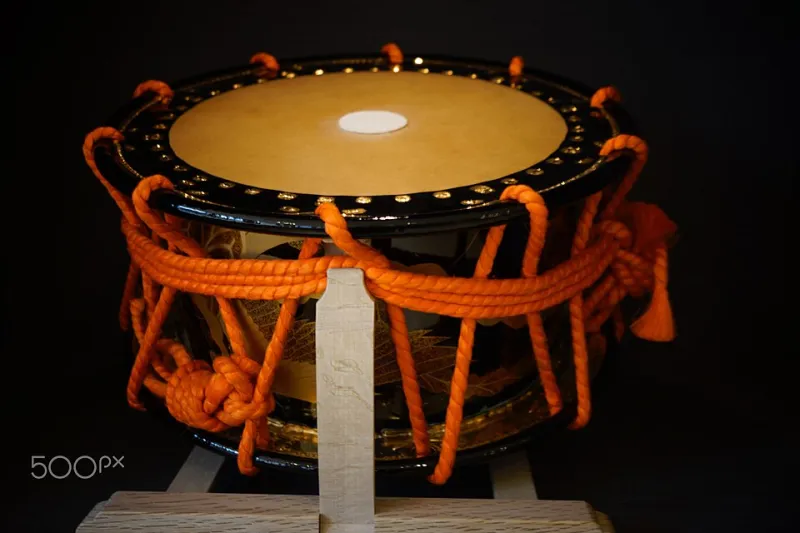
Dressed to Strike: The Evolving Visual Language of Taiko Performance in America
Photo: taiko drummer wearing traditional happi coat performing on stage, via www.tennis365.com
Before the first strike lands, the audience sees the performer. They register the stance, the grip, the focused expression — and the clothing. In taiko, visual presentation has never been incidental. The garments worn during performance are extensions of the art itself, communicating discipline, cultural identity, and artistic intention with the same precision the drums demand. In America, that visual language is being rewritten, carefully and creatively, by a new generation of performers who refuse to choose between tradition and self-expression.
The result is a style conversation unlike anything the taiko world has seen before — one that is unfolding not only on stage but across Instagram feeds, costume workshops, and independent design studios from California to New York.
The Weight of Traditional Garments
To understand where taiko fashion is going in America, it is necessary to first appreciate where it has been. The garments most closely associated with taiko performance carry centuries of meaning. The happi coat — a straight-sleeved jacket typically bearing the crest or name of a festival or organization — has long served as both uniform and emblem, instantly identifying a performer's affiliation and signaling their participation in something larger than themselves. The hachimaki, a cloth headband tied with intention, speaks to focus and effort. Even the tabi, the split-toed socks that allow a performer's feet to grip the stage, carry functional and aesthetic purpose simultaneously.
For many American taiko groups, these garments remain central to their visual identity, and their use is treated with corresponding seriousness. Ensembles that adopt traditional dress often do so as a deliberate act of cultural connection — a way of acknowledging the Japanese origins of the art form and honoring the communities that preserved and transmitted it. Wearing the happi is, in this context, a form of respect made visible.
"The clothing is part of the performance in the deepest sense," explains a costume director for a Bay Area ensemble that has been active for nearly two decades. "When our performers put on their happi, something shifts. The garment asks something of you. It asks you to be present, to be disciplined, to represent something beyond yourself."
Where Tradition Meets Innovation
Yet American taiko has never been a static art form, and its visual culture is no exception. Younger performers in particular are approaching questions of dress with both reverence and creative ambition, asking how traditional aesthetics can be honored while also reflecting the full complexity of their own identities.
The results range from subtle to striking. Some ensembles have begun incorporating indigo-dyed fabrics produced by American artisans working in Japanese textile traditions, creating garments that are technically rooted in Japanese craft while being made on American soil. Others have introduced color palettes that depart from the muted tones of traditional happi designs, using bold geometric patterns or gradient dyes that read as distinctly contemporary without abandoning the structural vocabulary of the original garment.
Perhaps the most visible trend is the emergence of what practitioners are calling fusion performance wear — garments that blend Japanese silhouettes with materials, cuts, and graphic elements drawn from American streetwear, athletic apparel, and even workwear traditions. A cropped happi worn over a fitted technical jersey. A hachimaki rendered in a fabric printed with imagery that references both Japanese mon crests and American graphic design. These combinations are not accidental. They are deliberate negotiations between heritage and lived experience.
Social Media as Style Stage
The platform on which much of this negotiation is now publicly conducted is social media, and its influence on taiko fashion has been transformative. Instagram and TikTok have given performers a global audience for their visual choices, and that audience has responded with an engagement that extends well beyond the taiko community.
Videos of ensemble rehearsals and performances regularly attract viewers who arrive via algorithm rather than cultural familiarity, and for many of these viewers, the visual presentation is the first point of contact. A striking costume can stop a scroll and begin a journey. Several American taiko groups have reported a measurable uptick in workshop inquiries and performance attendance following the viral circulation of visually compelling content.
The feedback loop runs in both directions. Performers are increasingly aware that their visual choices function as cultural ambassadorship, introducing taiko to audiences who may have no prior context for the art form. This awareness has made some ensembles more deliberate about their aesthetic decisions, treating costuming as a form of communication with potential audiences as much as with existing ones.
Independent designers who specialize in performance wear have taken notice. A small but growing number of American designers with backgrounds in both Japanese textile traditions and contemporary fashion are developing collections specifically aimed at the taiko community, offering garments that honor traditional forms while accommodating the physical demands of drumming — freedom of movement, durability, moisture management — and the visual expectations of a social-media-savvy audience.
Accessibility and Inclusion Through Dress
Beyond aesthetics, the evolving conversation around taiko fashion has a practical and philosophical dimension that speaks directly to the art form's growth in America. Traditional garments, sourced from Japan, can be costly and difficult to obtain, creating a barrier for newer practitioners and under-resourced community groups. The development of domestically produced alternatives — whether through independent designers, community sewing circles, or partnerships with American textile manufacturers — has the potential to make taiko participation more accessible across economic lines.
There is also a meaningful conversation underway about how taiko dress can better reflect the diversity of American performers. Ensembles whose membership includes people of varying body types, gender expressions, and cultural backgrounds are rethinking garment design to ensure that everyone on stage feels represented and accommodated. Some groups have moved toward modular costume systems that allow individual performers to personalize their presentation within a cohesive ensemble framework — a solution that honors both collective identity and individual expression.
A Visual Art Coming Into Its Own
Taiko has always demanded that its practitioners be fully present — in body, in mind, and in spirit. The clothes performers choose to wear are, in the American context, becoming an expression of that full presence, carrying within their seams a story about who taiko is for, where it comes from, and where it is going.
The conversation is ongoing, and it is richer for the range of voices now participating in it — traditionalists, experimenters, designers, community organizers, and performers who simply want to look as powerful as they feel when the drum is beneath their hands. In that richness, as in so much else about American taiko, there is genuine cause for attention and appreciation.