Intimate Thunder: How Taiko Is Finding a New Home in Galleries, Lofts, and Living Rooms Across America
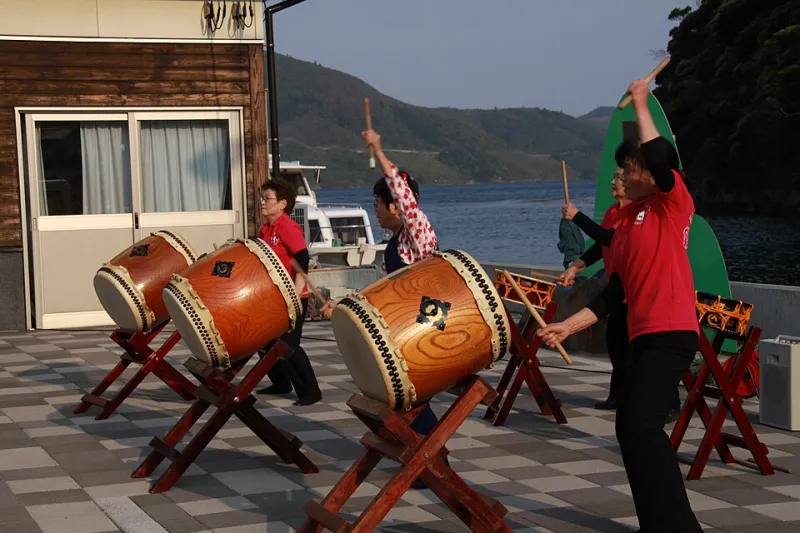
Photo: Yuvalr, CC BY-SA 4.0, via Wikimedia Commons
For decades, the image of taiko in America has been inseparable from spectacle. Massive drums, soaring stages, and audiences numbering in the thousands defined the art form's public profile. Yet something quieter — and arguably more profound — is happening in the margins of that grand narrative. Across cities from Portland to Philadelphia, taiko drummers are dismantling the proscenium and carrying their instruments into spaces that were never designed to hold them: converted warehouse lofts, urban art galleries, rooftop terraces, and even private living rooms.
This is not a retreat from ambition. It is a deliberate reimagining of what taiko can be, and who it can reach.
The Architecture of Encounter
Traditional concert venues impose a particular relationship between performer and audience — one defined by distance, formality, and a kind of reverence that, while appropriate for certain experiences, can also feel alienating. When a taiko ensemble performs in a 2,000-seat auditorium, the drums speak loudly, but the conversation is largely one-directional.
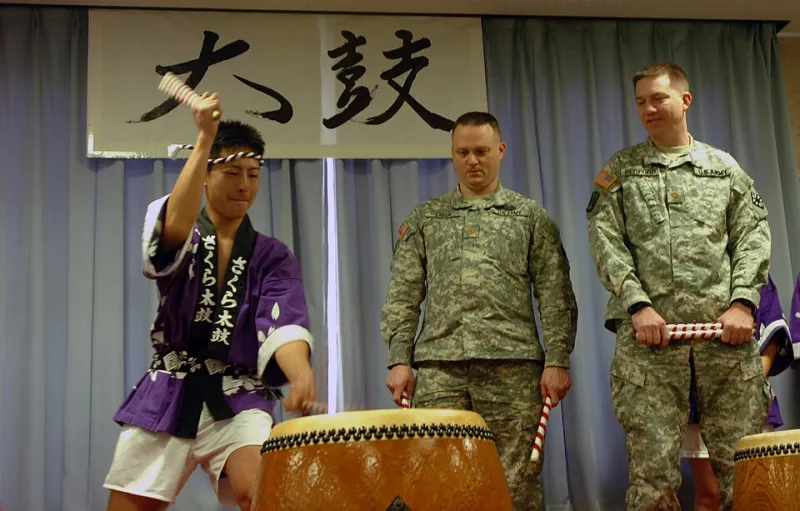
In a gallery space seating forty people, something different occurs. The vibration of the nagado-daiko is no longer an abstraction felt from thirty rows back — it moves through the floor, through the chairs, through the chest. Audience members find themselves physically inside the music in a way that no concert hall can replicate. This sensory immediacy is precisely what draws both performers and presenters toward unconventional venues.
"There's a moment in a small space when you can see someone's expression change," says one West Coast taiko artist who has performed in venues ranging from San Francisco warehouse galleries to intimate backyard events in the East Bay. "They expected to be impressed. They didn't expect to be moved. That distinction matters enormously to me as a performer."
The Economics of Intimacy
Beyond the artistic calculus, the shift toward smaller venues carries significant economic implications for working taiko musicians. Touring with a full ensemble to major presenting organizations requires substantial infrastructure — travel, lodging, staging, sound reinforcement, and the considerable administrative labor of booking large-scale events. For many mid-career drummers, that model remains aspirational rather than sustainable.
Smaller, more intimate engagements offer a different financial architecture. A private performance for a corporate dinner in Manhattan, a gallery opening in Chicago's West Loop, or a curated house concert in a Los Angeles neighborhood — each of these represents a transaction that can be arranged with far less overhead. Ensembles of two to four musicians can command meaningful fees while keeping logistical complexity manageable.
The rise of platforms that connect performing artists with private event hosts has accelerated this trend. Several taiko practitioners report that private and semi-private engagements now constitute a meaningful portion of their annual income — in some cases, the majority. This shift is quietly reshaping the economics of professional taiko in America, creating pathways to sustainability that did not exist a generation ago.
Curators as Cultural Brokers
Art galleries have emerged as particularly fertile ground for this movement. Gallery directors and independent curators increasingly recognize that sound-based performance creates an experiential dimension that visual art alone cannot provide. Taiko, with its visual drama and physical presence, fits naturally into that programming logic.
Several galleries in cities with significant Japanese-American communities — Los Angeles, Seattle, New York, and the San Francisco Bay Area — have begun incorporating taiko performances into exhibition openings and artist residencies. These collaborations benefit both parties: the gallery gains a distinctive programming identity, while the taiko ensemble gains access to an audience that may never have attended a traditional percussion concert.
These cross-disciplinary encounters also encourage new creative directions. When taiko artists are asked to respond to a visual art exhibition, or to perform in dialogue with a sculptor's work, the result is often something that neither party could have produced independently. Constraint, it turns out, is a generative force.
House Concerts and the Democracy of the Drum
Perhaps the most radical expression of this trend is the house concert — a format borrowed from the folk and classical music worlds and now finding traction in taiko. The premise is straightforward: a host opens their home, invites a curated group of guests, and presents a taiko performance in their living room, backyard, or garage.
The intimacy of this format strips away every layer of institutional mediation. There is no box office, no program notes, no usher. There is simply a drum, a drummer, and a room full of people who chose to be there.
For many audience members, particularly those encountering taiko for the first time, the house concert format removes barriers that conventional venues inadvertently erect. The informality signals that this experience is accessible — that one need not possess specialized cultural knowledge to participate meaningfully. Post-performance conversation flows naturally, and drummers report that the questions and connections that emerge in these settings are among the most substantive they encounter anywhere.
Preserving Depth While Expanding Reach
Not everyone in the taiko community embraces this shift without reservation. Some practitioners express concern that the intimization of the art form risks diluting its ceremonial weight. Taiko has deep roots in Shinto ritual and Buddhist observance; certain pieces carry spiritual significance that may be inadequately honored in a loft party setting.
This tension is real, and responsible practitioners navigate it carefully. Many draw clear distinctions between repertoire appropriate for intimate secular settings and material that belongs in more formally bounded contexts. The conversation itself — about what taiko is, what it means, and what obligations performers carry — is perhaps the most important one the American taiko community is currently having.
What is clear is that the movement of taiko into unconventional spaces is not a dilution of the tradition but an extension of it. Japanese percussion has always adapted to the communities it serves. In America, those communities are diverse, geographically dispersed, and hungry for cultural experiences that feel genuine rather than packaged. The living room, it turns out, may be exactly the right room.