Pixels, Playlists, and Percussion: How Anime and Gaming Are Fueling a Taiko Renaissance Among Gen Z

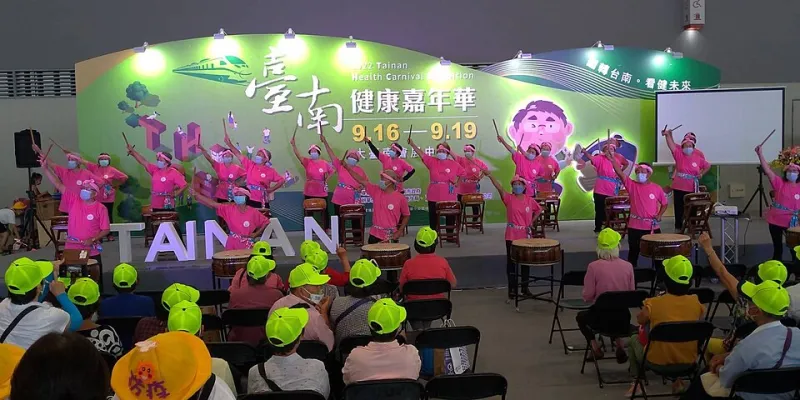
Photo: young diverse taiko drummers performing on stage with dramatic lighting, via img.freepik.com
On a Saturday afternoon in Portland, Oregon, a rehearsal studio echoes with the deep, resonant thunder of o-daiko drums. The players range in age from sixteen to twenty-four. Several of them arrived at taiko not through family heritage or community festivals, but through an unexpected path: a rhythm video game, a beloved anime series, or a thirty-second clip that surfaced in their social media feed.
This scene is playing out with increasing frequency across American cities. Taiko drumming — a centuries-old Japanese percussive tradition — is experiencing a measurable surge in interest among Generation Z audiences, and the catalysts are decidedly modern. Anime franchises, video game soundtracks, and algorithmically amplified performance clips are doing what decades of cultural outreach programs could not entirely accomplish on their own: making taiko feel immediately accessible, thrilling, and relevant to young Americans who may have never set foot in Japan.
The Anime Effect
It would be difficult to overstate the cultural footprint of anime in the United States right now. Streaming platforms such as Crunchyroll and Netflix report tens of millions of active anime viewers in North America, with Gen Z comprising the largest demographic segment. Within that enormous viewership, taiko percussion appears with striking regularity — as dramatic underscore in battle sequences, as ceremonial texture in historical epics, and occasionally as a central narrative element.
Series including Demon Slayer: Kimetsu no Yaiba and Jujutsu Kaisen feature soundtracks by composers who draw heavily on traditional Japanese instrumentation. For many young viewers, the thunderous percussion embedded in those scores is their first conscious encounter with taiko's sonic vocabulary. The association is visceral: taiko becomes linked with intensity, power, and emotional catharsis.
"I literally paused an episode and searched 'what is that drumming' on my phone," recalls Maya Thornton, a nineteen-year-old college student who now performs with a community taiko ensemble in the Chicago area. "Within an hour I had watched probably forty YouTube videos and found out there was a group twenty minutes from my house. I signed up for a workshop the next week."
Thornton's trajectory is not unusual. Taiko instructors across the country report that new adult beginners frequently cite anime or gaming as their initial point of contact with the art form.
Rhythm Games as a Gateway
The Taiko no Tatsujin franchise — known in North America as Taiko: Drum Master — has introduced the fundamental aesthetic of taiko performance to millions of players worldwide since its arcade debut in 2001. With renewed releases on Nintendo Switch and PlayStation platforms, the game continues to attract fresh audiences who find themselves captivated by the interplay of rhythm, precision, and the distinctive visual language of Japanese drumming culture.
While tapping a controller or drum peripheral is a far cry from striking a stretched cowhide drum in a community dojo, researchers and instructors alike note that rhythm games cultivate genuine musical sensibility. Players develop an ear for tempo, an appreciation for dynamic variation, and — crucially — a curiosity about the source material.
"The game is a door," says Kenji Watanabe, a taiko instructor based in San Jose who has taught for more than fifteen years. "Students come in having already internalized a sense of rhythm and a love for the sound. Our job becomes showing them what that sound means in a human, embodied context — which is something no screen can fully replicate."
Watanabe notes that enrollment in his beginner workshops has grown by roughly forty percent over the past three years, with a disproportionate share of new students identifying as gamers or anime enthusiasts.
Social Media and the Viral Bachi
Platforms such as TikTok and Instagram Reels have accelerated this cultural crossover considerably. Short-form video clips of taiko performances — particularly those featuring athletic physicality, synchronized ensemble work, or solo displays of technical virtuosity — accumulate millions of views with remarkable consistency. The visual drama of taiko is well suited to the compressed attention economy of social media: the wide stance, the full-body commitment of each strike, the sheer volume of sound that seems almost impossible given the human scale of the performer.
Several taiko groups have leaned deliberately into this dynamic. The San Francisco-based ensemble Taiko Project and Los Angeles's KODO-inspired community groups have amassed substantial followings by posting high-quality performance footage that invites comment, sharing, and imitation. Some clips have crossed over into mainstream virality, appearing on feeds entirely unrelated to Japanese culture.
"People tag their friends with comments like 'this is so cool' or 'I want to try this,'" observes Priya Mehta, a twenty-two-year-old who performs with a university taiko club in Austin, Texas. Mehta, who is of South Asian descent, emphasizes that the social media context made taiko feel welcoming rather than exclusive. "It wasn't presented as something you had to have a cultural background in. It was just — look at this incredible thing humans can do."
Honoring Tradition While Welcoming New Voices
The influx of pop-culture-motivated newcomers has prompted thoughtful conversation within the taiko community about cultural stewardship. Taiko in America has its own distinct history, rooted in the Japanese American community and forged in part through the activism and identity politics of the 1960s and 1970s. For many long-standing practitioners and organizations, the art form carries profound cultural and historical weight that extends well beyond its entertainment value.
Leading groups have responded by developing onboarding curricula that pair technical instruction with cultural and historical education. New students learn not only how to hold the bachi correctly but also the significance of the kata — the prescribed body postures — and the community-oriented philosophy known as kiai, which encompasses spirit, intention, and collective energy.
"We don't want taiko to become a trend that burns bright and fades," says Watanabe. "We want people to come in through anime or gaming and then discover the depth. Most of the time, when they do, they stay."
The evidence suggests that many of them do. Retention rates at established taiko dojos remain strong, and the demographic diversification brought by the pop-culture pipeline is increasingly visible at regional and national taiko gatherings. What began as a click on a streaming platform or a high score on a rhythm game is, for a growing number of young Americans, becoming a lasting and meaningful artistic practice.
The mu — the resonant space between drumbeats — has never sounded quite like this before. And that, perhaps, is precisely the point.