Beats Without Borders: How Taiko Enthusiasts Are Transforming Spare Rooms and Backyards Into Sacred Practice Spaces
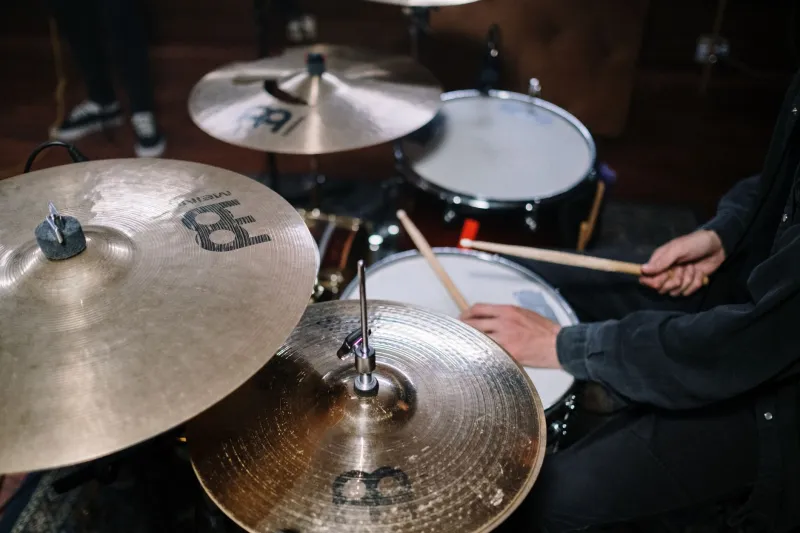
In a two-car garage in suburban Portland, Oregon, the walls are lined with moving blankets and acoustic foam panels salvaged from a local music store's closeout sale. A hand-built practice drum — constructed from a repurposed wine barrel and a sheet of cowhide ordered online — sits at the center of the space on a custom wooden stand. Its owner, a middle school science teacher named Daniel Watanabe, strikes it with borrowed bachi sticks every morning before his students arrive for first period. He has never set foot inside a formal taiko dojo. Yet his command of basic kata, rhythmic phrasing, and posture would earn quiet approval from seasoned practitioners.
Watanabe is not an outlier. He is a representative of a growing and largely undocumented movement within American taiko culture — one in which practitioners are bypassing institutional pathways entirely and constructing their own practice ecosystems from the ground up.
The Friction That Fueled a Movement
For decades, the American taiko experience was defined by ensemble membership. To learn, one joined a group. To perform, one rehearsed within a structured organization. Studios and community centers served as the primary gatekeepers of access, and for good reason: taiko is a physically demanding, technically nuanced art form that benefits enormously from in-person instruction and collective energy.
But access has never been uniformly distributed. Formal taiko groups remain concentrated in cities with established Japanese-American communities — Los Angeles, San Francisco, Seattle, Honolulu, Chicago. For the millions of Americans who live beyond those metropolitan corridors, or who face scheduling, financial, or physical barriers to ensemble participation, the traditional pathway has often felt closed.
The COVID-19 pandemic accelerated what was already a simmering undercurrent. When studios shuttered and group rehearsals halted, even experienced taiko players found themselves without a practice space. The response, for many, was improvisation. Drummers dragged equipment into driveways. Beginners built their first practice drums from tire sections and PVC pipe. Online tutorials that had previously served as supplements became primary instructional resources overnight.
What emerged from that period of constraint was not merely a workaround. It was, for many, a revelation.
Building the Drum Before You Strike It
The DIY taiko drum — known colloquially within online communities as a "shime substitute" or simply a "practice bachi drum" — has become a minor art form in its own right. Resourceful practitioners have documented their builds on YouTube channels, Reddit threads, and dedicated Discord servers, sharing everything from materials sourcing guides to tensioning techniques for synthetic drumheads.
The most common beginner-friendly construction involves a wooden base — often a section of a hardwood log, a commercial barrel, or a purchased wooden drum shell — paired with a synthetic drumhead tensioned with hardware-store bolts and metal rings. The resulting instrument does not replicate the resonance of a traditional nagado-daiko, but it provides the tactile feedback and physical resistance necessary for developing proper striking technique and body mechanics.
"The goal was never to replace a real taiko," explains Keiko Sato, a Houston-based graphic designer who built her first practice drum during the spring of 2020 and has since constructed three additional instruments of varying sizes for friends. "It was to keep the body moving, to keep the relationship with the rhythm alive. You can learn a tremendous amount from an imperfect instrument if you approach it with intention."
Sato now hosts informal monthly gatherings in her backyard that she describes as "neighborhood drum circles with a Japanese heart." Participants range from complete novices to a former member of a San Francisco-based professional ensemble who relocated to Texas for work. The sessions are unaffiliated with any formal organization, guided by no single sensei, and documented primarily through short-form video clips shared across social platforms.
The Digital Dojo
Social media has functioned as both classroom and community hall for the home taiko movement. Instagram accounts dedicated to solo practice sessions accumulate followers who might never otherwise encounter the art form. TikTok videos of practitioners drilling foundational exercises in kitchen corners have introduced taiko's physicality and visual drama to audiences far outside traditional Japanese-American cultural spaces.
But the deeper infrastructure of this community lives in less visible corners of the internet. Private Facebook groups with membership numbering in the hundreds serve as ongoing forums for technique questions, equipment recommendations, and mutual encouragement. Discord servers organized around specific regional interests — the Pacific Northwest, the Mid-Atlantic, the American South — allow practitioners to coordinate in-person meetups and share instructional resources.
"I found my people on a Facebook group at two in the morning," recalls Marcus Ellison, a Nashville-based nurse who began exploring taiko after attending a Japanese cultural festival in 2019. "I had questions about how to hold the bachi correctly, and within an hour I had six responses from people in four different states. That sense of connection — that was what I needed to keep going."
Ellison has since become a connector within his regional community, organizing quarterly outdoor sessions in a local park that draw between eight and twenty participants depending on the season. He has never formally studied taiko, but he has absorbed instruction from online tutorials, virtual workshops offered by established ensembles, and the accumulated wisdom of the digital community he inhabits.
Honoring the Tradition While Charting New Territory
The home taiko movement occupies a nuanced position within American taiko culture more broadly. Established ensembles and master teachers have responded to it with a mixture of genuine encouragement and measured caution. The enthusiasm is welcome; the potential for the transmission of incorrect technique, or for the cultural dimensions of taiko to be stripped away in favor of pure percussion novelty, warrants thoughtful attention.
Several formal taiko organizations have responded constructively by expanding their virtual programming, offering beginner workshops specifically designed for home practitioners, and creating educational content that contextualizes the art form's roots in Japanese agricultural and religious life. The goal, as articulated by many within the established taiko community, is not to police the boundaries of participation but to ensure that those entering through informal pathways have access to the cultural and historical knowledge that gives the practice its depth.
"Taiko was always meant to be shared," observes one longtime ensemble director based in the San Francisco Bay Area, who asked not to be identified by name. "If someone is striking a barrel drum in their garage and feeling connected to something larger than themselves, that is not a problem. The question is how we help them understand what that something larger actually is."
A Practice That Lives Where It Is Played
What distinguishes the home taiko movement at its most thoughtful is not the equipment or the setting but the intentionality its practitioners bring to a fundamentally communal art form. The spare bedroom and the backyard gathering cannot replicate the experience of performing before a thousand people, or of rehearsing for months toward a single transcendent concert. But they offer something different and, for many practitioners, equally valuable: a daily, intimate relationship with rhythm, physicality, and the quiet discipline that taiko demands.
For Daniel Watanabe, the Portland teacher whose garage practice opened this story, the morning ritual has become as essential as breakfast. He does not perform publicly. He does not belong to an ensemble. He strikes his hand-built drum before dawn and feels, in that solitary moment, connected to a tradition that stretches across an ocean and several centuries.
"I don't know if what I'm doing would satisfy a master," he says with a measured smile. "But I know it satisfies something in me. And I know I'm not alone in that."
He is, quite demonstrably, correct.