Beyond the Conservatory: How Intensive Taiko Apprenticeships Are Reshaping the Way Young Americans Train in the Arts
For generations, the accepted pathway for a serious young musician in America has followed a familiar arc: audition for a conservatory, accumulate degrees, and emerge credentialed for a career in performance or pedagogy. That model, however sturdy it may appear on a résumé, was never designed with taiko in mind. And increasingly, the young Americans most drawn to this ancient Japanese percussion tradition are choosing to step outside it entirely.
Across the country, a quiet but consequential shift is underway. Six-month intensive apprenticeship programs, residential immersion residencies, and structured mentorship cohorts focused on taiko are attracting students who might otherwise have enrolled in four-year music programs. They are trading lecture halls for dojo-style practice spaces, credit hours for callused palms, and academic transcripts for something harder to quantify — and, many would argue, more durable.
A Different Kind of Curriculum
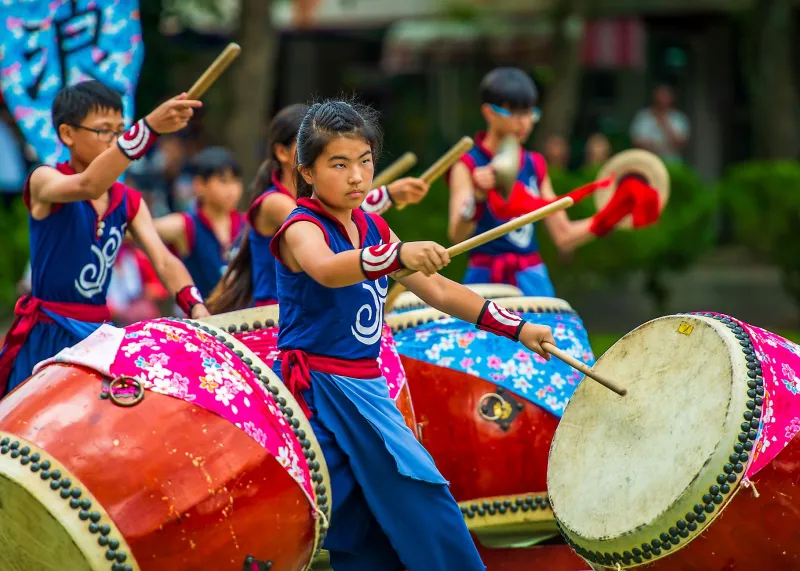
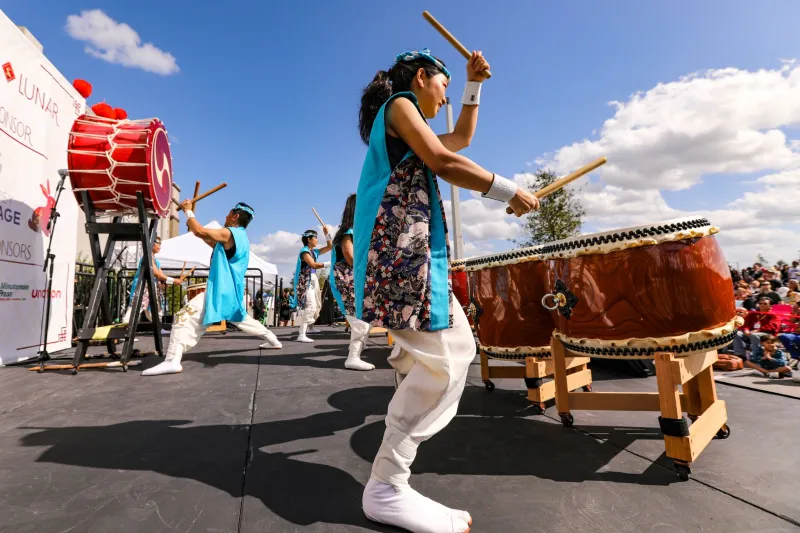
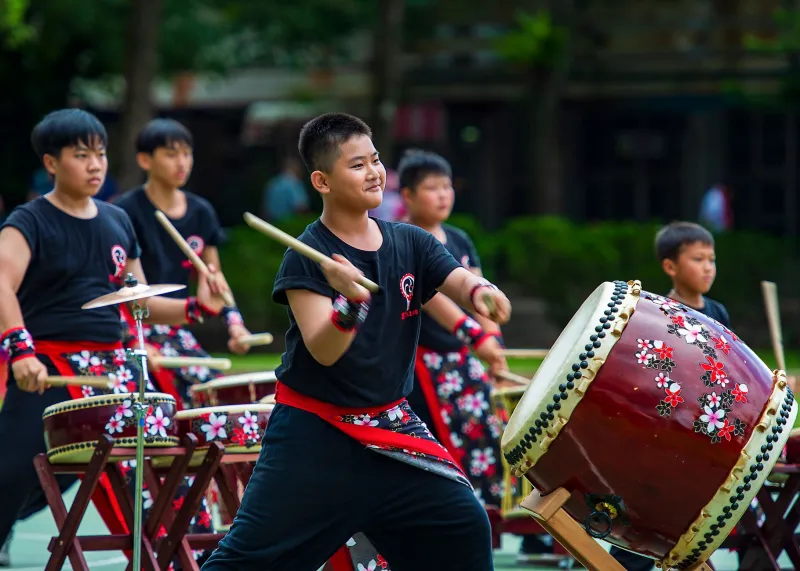
What separates a taiko apprenticeship from a university elective or a weekend workshop is the totality of the experience. Participants are not simply learning to strike a drum. They are absorbing a philosophy of movement, studying the historical and social contexts in which taiko developed, and submitting to a rigorous physical and mental discipline that mirrors, in many respects, the training culture of traditional Japanese martial arts.
At programs operating in California, the Pacific Northwest, and the greater Chicago area, a typical day might begin with warm-up exercises drawn from budo traditions, progress through hours of ensemble rehearsal, and conclude with reflection sessions in which students examine the cultural weight of what they are practicing. Instruction is delivered not through syllabi but through demonstration, repetition, and the kind of direct transmission that has defined Japanese apprenticeship culture for centuries.
"What we are offering is not a shortcut," said one program director based in the San Francisco Bay Area, whose six-month cohort draws applicants from across the country each year. "If anything, it is more demanding than a semester of conservatory training because there is nowhere to hide. You are accountable to the group, to the tradition, and to yourself every single day."
Why Students Are Choosing This Path
The motivations among participants are varied, but several themes recur with notable consistency. Many express a desire for training that is culturally rooted rather than purely technical. Others describe a sense that conventional music education, however rigorous, left them feeling disconnected from any living tradition. For a significant portion, taiko represents a first meaningful encounter with Japanese culture — one they want to pursue with genuine seriousness rather than casual curiosity.
Marcella Okonkwo, a twenty-four-year-old from Atlanta who completed a six-month program in Seattle last year, described her decision in straightforward terms. "I had finished two years of a music performance degree and I felt like I was learning craft without context," she said. "With taiko, every technique has a history, a community, a reason for existing. The apprenticeship format forced me to understand all of that, not just the mechanics."
Her experience reflects a broader generational appetite for education that feels purposeful and embodied. At a moment when student loan debt has become a defining anxiety for young Americans, the comparatively accessible cost of a six-month intensive program — often supported by scholarships, work-exchange arrangements, or sliding-scale tuition — carries practical weight as well.
What Employers Are Noticing
Perhaps the most unexpected dimension of this trend is the attention it has begun to attract from employers well outside the performing arts. Corporate training consultants, nonprofit administrators, and healthcare organizations have started to recognize that taiko apprenticeship alumni arrive with a distinctive professional profile.
The qualities most frequently cited are not musical in nature. Interviewers describe graduates of intensive taiko programs as unusually attuned to group dynamics, adept at nonverbal communication, and possessed of a tolerance for discomfort and repetition that proves valuable in high-pressure team environments. Cultural competency — an increasingly sought-after credential in diverse American workplaces — is another attribute that program alumni tend to demonstrate with uncommon depth.
"I have hired two people in the past three years who listed taiko apprenticeships prominently on their applications, and both of them stood out immediately," said a human resources director at a mid-sized healthcare nonprofit in the Pacific Northwest who asked not to be identified by name. "There is a quality of attention and presence that is difficult to teach in a corporate training seminar. These individuals had clearly developed it through something much more rigorous."
Program directors are aware of this perception and, in some cases, have begun to articulate their offerings explicitly in terms of transferable professional development. Several programs now issue completion certificates that enumerate the competencies cultivated during training, including cross-cultural communication, leadership within ensemble structures, and sustained physical and mental endurance.
The Question of Authenticity and Stewardship
The growth of these programs has not been without its tensions. Within the taiko community, conversations about cultural stewardship, lineage, and the appropriate transmission of Japanese artistic traditions are ongoing and sometimes pointed. Who is qualified to lead an apprenticeship program? How should non-Japanese instructors navigate their role as conduits for a tradition that carries specific historical and communal meaning?
Most program directors engaged with these questions directly and thoughtfully. Several emphasized the importance of maintaining active relationships with Japanese and Japanese-American master practitioners, of incorporating historical education that addresses taiko's roots in agricultural ritual and its evolution through the Japanese-American incarceration experience, and of approaching the tradition with what one instructor described as "a posture of gratitude and accountability rather than ownership."
These are not abstract considerations. They shape the daily texture of how programs are run, what is taught, and in what spirit students are asked to receive instruction. The seriousness with which most programs treat these questions is itself a marker of the tradition's influence on those who enter it deeply.
A Pathway Still Taking Shape
The taiko apprenticeship movement in America is young, and its long-term contours remain to be determined. There is no national accrediting body, no standardized curriculum, and no established pipeline connecting program graduates to professional opportunities in any systematic way. These are gaps that leaders within the taiko community are beginning to address, through convenings, shared standards conversations, and emerging alumni networks.
What is already clear is that something significant is happening. Young Americans are seeking out a form of training that asks more of them than a degree program typically does — more presence, more humility, more physical commitment, and more cultural engagement. They are finding, in the structure and philosophy of taiko apprenticeship, an education that meets those expectations.
The drum, as practitioners have long understood, does not reward passivity. Neither, it seems, does the path that leads most seriously to it.