Made in America? The Long Wait for a Domestic Taiko Industry
Walk into virtually any taiko dojo, university ensemble rehearsal space, or professional percussion studio in the United States, and the drums you encounter almost certainly began their lives in Japan. They were likely fashioned from keyaki—Japanese zelkova—or hollowed from a single log by craftsmen whose families have worked the same wood for generations. They crossed the Pacific in crates, cleared customs, and arrived at their destinations carrying price tags that can easily exceed several thousand dollars per instrument.
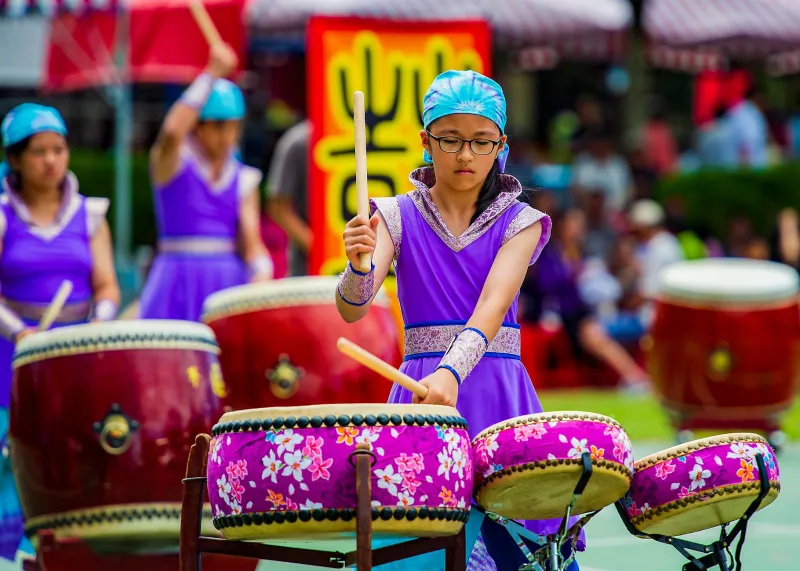
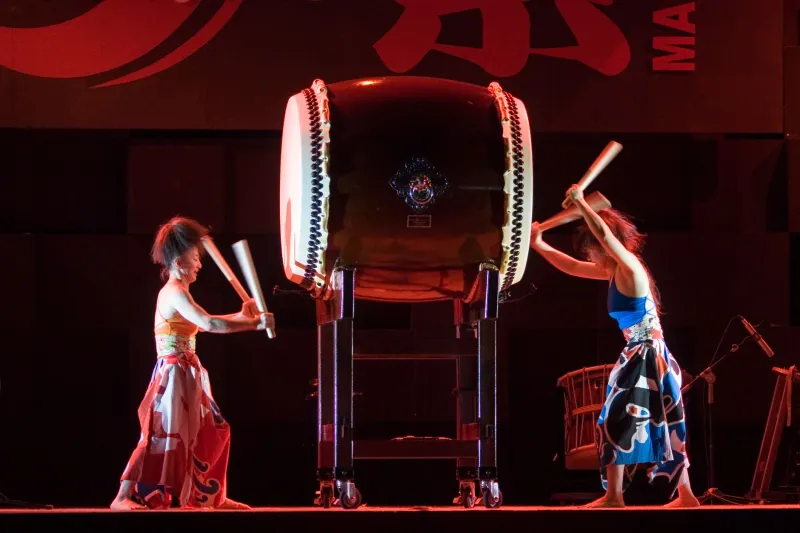
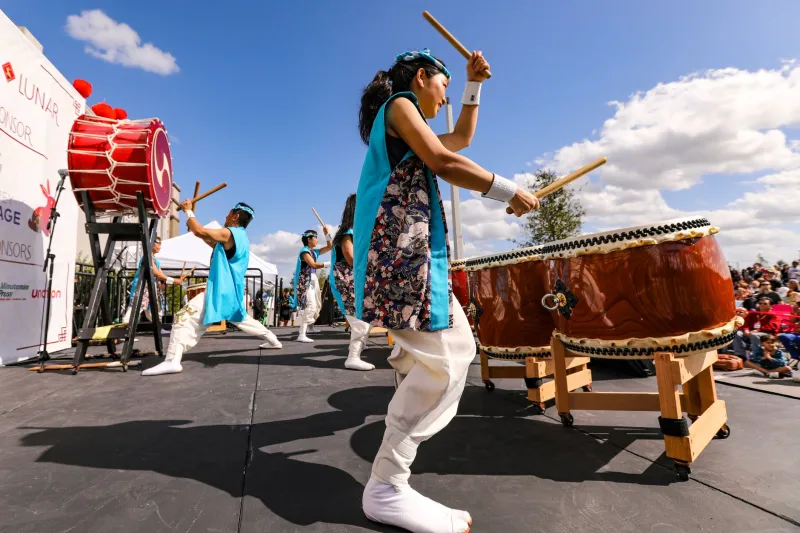
For a tradition that has taken genuine root on American soil, this supply-chain reality is striking. Taiko participation in the United States has grown steadily since the late 1960s, when San Francisco's Seiichi Tanaka founded what many consider the first North American taiko group. Hundreds of ensembles now perform from Hawaii to Maine. Yet the industry that manufactures the instruments central to this movement has remained, with rare exceptions, firmly situated overseas.
The question worth asking is not simply why this gap exists. The more consequential question is what it costs American taiko communities—financially, culturally, and logistically—to sustain a practice whose most essential tool must be sourced from the other side of the world.
The Economics of an Imported Instrument
A professional-grade nagado-daiko from a respected Japanese maker can retail in the United States for anywhere between $3,000 and $15,000 or more, depending on size and construction. Shipping alone can add hundreds of dollars to the final cost, and the instruments are fragile enough that damage in transit is not unheard of. For community-based ensembles operating on nonprofit budgets, acquiring even a modest set of drums can represent years of fundraising.
The financial barrier is not incidental. It shapes who can participate, which groups can expand, and which communities encounter taiko at all. Smaller ensembles in rural areas or lower-income urban neighborhoods frequently rely on aging instruments, shared equipment, or drums constructed from wine barrels and repurposed hardware—functional, but distinct from the tonal qualities of a properly crafted Japanese drum.
Importers and distributors who specialize in taiko equipment acknowledge the demand is real. Several have reported consistent year-over-year increases in inquiries from new ensembles and individual practitioners. The market exists. What has not materialized, at least not at scale, is a domestic manufacturing sector willing or able to meet it.
Why American Manufacturers Have Largely Stayed Away
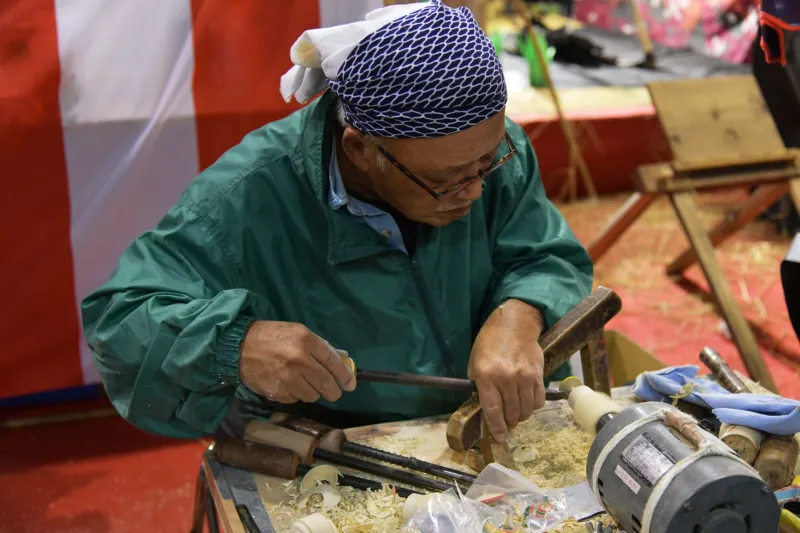
The reasons are layered. Taiko construction—particularly the crafting of a high-quality nagado-daiko from a single log—is not a process that lends itself to rapid industrialization. The wood must be selected carefully, dried over an extended period, and worked by hands trained to read grain and tension in ways that take years to learn. Japanese makers who have earned reputations in this craft often represent multigenerational workshops where knowledge is transmitted slowly and deliberately.
American instrument manufacturing, by contrast, has historically organized itself around different traditions—guitars, drums of the Western kit variety, brass and woodwind instruments. The infrastructure, the material sourcing networks, and the skilled labor pools simply do not exist in the same configuration that taiko production requires.
There is also a cultural dimension that cannot be separated from the commercial one. Taiko drums are not merely percussion instruments in the way a snare drum is a percussion instrument. They carry ceremonial, spiritual, and communal significance that is inseparable from the contexts in which they are made. For many practitioners, the provenance of an instrument matters. A drum built in Japan by craftsmen steeped in that tradition carries an authenticity that is difficult to replicate and, for some, impossible to replace.
The Makers Who Are Trying Anyway
Despite these obstacles, a small but determined cohort of American craftspeople has begun exploring domestic taiko production. Their approaches vary considerably.
Some have traveled to Japan to apprentice with established makers, returning with technical knowledge and, in certain cases, formal permission to apply those methods in the United States. Others have arrived at taiko construction through adjacent woodworking traditions—cooperage, furniture making, instrument lutherie—adapting their existing skills to a new form.
Several of these makers have found receptive audiences among ensembles that prioritize accessibility and are willing to accept a drum whose tonal character may differ from its Japanese counterpart. The instruments produced in American workshops are not universally considered inferior; some practitioners describe them as possessing a distinct sonic quality that suits certain repertoire particularly well.
What these makers share is a recognition that they are not attempting to replicate Japan's tradition so much as to begin building one of their own. That distinction matters, both philosophically and practically. It allows American craftspeople to work with domestically available woods—black walnut, white oak, and various hardwoods native to North American forests—rather than attempting to source keyaki, which is not grown commercially in the United States and must itself be imported when used here.
Authenticity, Accessibility, and the Question of Origin
The tension between authenticity and accessibility runs through every conversation about domestic taiko production. Purists argue, with reasonable justification, that the materials and methods of Japanese craftsmanship are not incidental features of a taiko drum but constitutive ones. To change the wood, the tools, or the hands that shape the instrument is, in this view, to produce something related to but distinct from taiko.
Others push back on this framing, noting that taiko itself has never been a static tradition. The instruments and performance styles associated with modern ensemble taiko—kumi-daiko—were largely codified in the twentieth century. American taiko has already developed its own aesthetic vocabulary, its own repertoire, and its own community structures. It is not obvious why the instruments should be the one element exempt from evolution.
For working ensembles, the debate is often secondary to practical necessity. A group that cannot afford imported drums and has access to a locally made alternative will often make the pragmatic choice. Over time, those choices accumulate into something that begins to resemble a market—and markets, historically, tend to attract producers.
What a Domestic Industry Might Require
Those who have studied the question most closely suggest that a viable American taiko manufacturing sector would require several convergent developments: sustained investment in training craftspeople, the development of reliable domestic wood sourcing, and a shift in purchasing culture within taiko communities toward supporting American makers even when doing so involves a degree of aesthetic compromise.
Institutional support could also play a role. Cultural organizations, arts foundations, and university programs with taiko ensembles are positioned to commission instruments from domestic makers, providing both revenue and a form of credibility that helps new craftspeople establish reputations.
None of this is imminent. The gap between Japan's centuries of accumulated craft knowledge and America's nascent experiments in taiko construction is not one that closes quickly. But the practitioners, makers, and community leaders who are paying attention to this question tend to share a measured optimism. The tradition took root in American soil against considerable odds. There is reason to believe that, given time, the instruments may follow.