Two Drums, One Heartbeat: The Emerging Dialogue Between Taiko and Native American Percussion Traditions
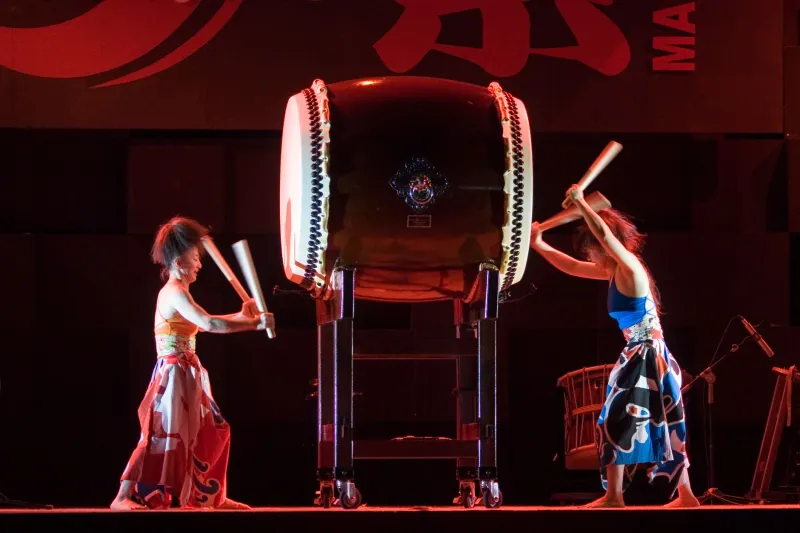
There is a moment, familiar to anyone who has stood inside a drum circle or at the edge of a taiko stage, when the sound stops being something you hear and becomes something you feel. The chest opens. The breath slows. The boundary between the instrument and the body grows uncertain. It is a sensation that transcends geography, yet it is deeply rooted in specific places, specific peoples, and specific histories.
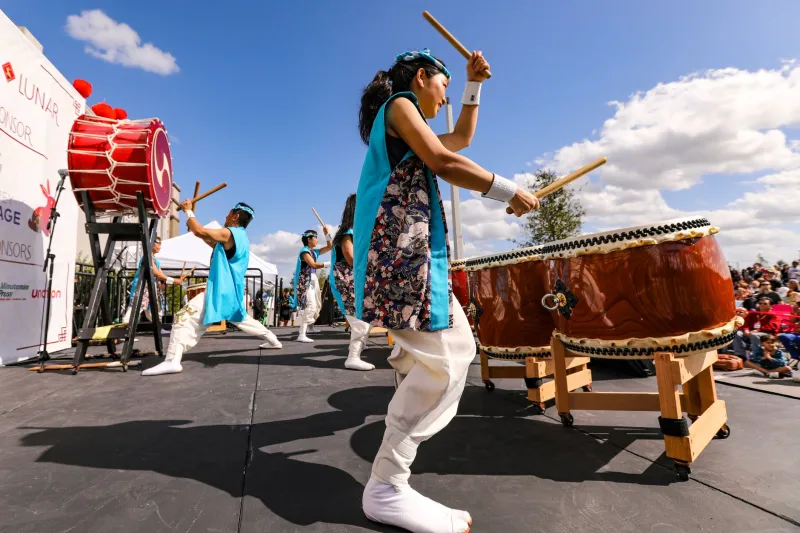
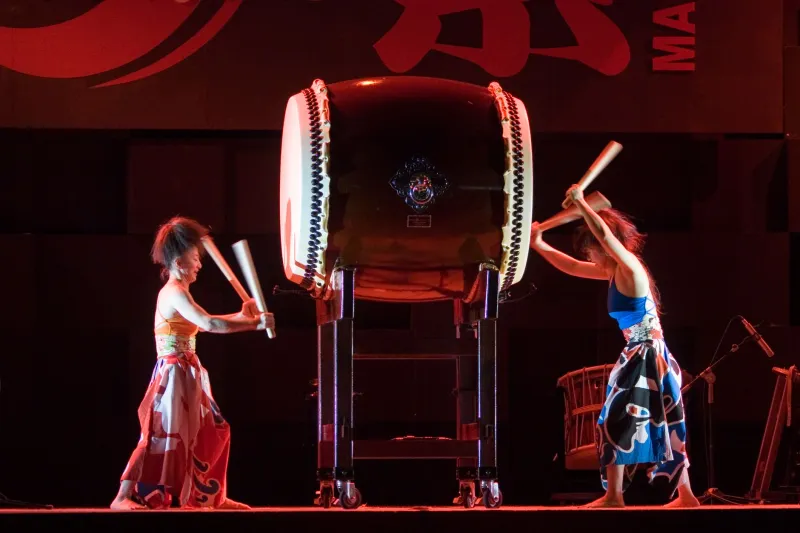
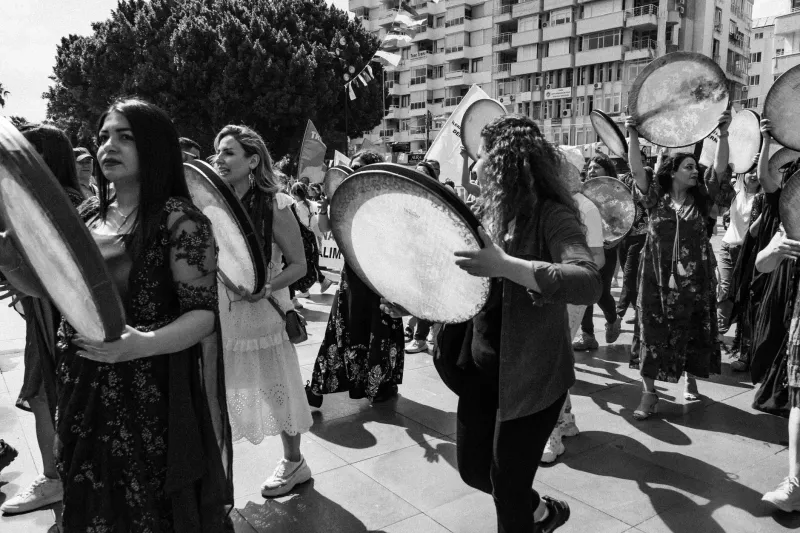
In recent years, a small but growing number of taiko practitioners and Native American percussionists across the United States have begun to explore what it means when those two experiences meet — when the o-daiko and the ceremonial hand drum share the same room, the same stage, or the same circle of intention. The results have been by turns illuminating, complicated, and genuinely transformative.
A Meeting Born of Mutual Recognition
The conversations now taking shape did not emerge from institutional programming or festival marketing. They grew, by most accounts, from a simpler recognition: that both traditions understand the drum as something far more than an instrument.
"In taiko, the drum is not a tool," explains Keiko Tanaka, a taiko instructor based in Albuquerque, New Mexico, who has spent more than a decade building relationships with Pueblo communities in the Rio Grande region. "It carries spirit. It carries memory. It carries the weight of the people who played before you. When I first sat with elders from the Sandia Pueblo and we talked about what the drum meant to each of us, I realized we were speaking the same language, even though the words were entirely different."
That shared understanding of the drum as a living, ancestral presence has become the most reliable foundation for cross-cultural exchange. It is also, practitioners are quick to note, the reason such exchanges demand extraordinary care.
The Ethics of the Circle
Not every taiko drummer is prepared — or, some would argue, qualified — to engage with Indigenous percussion traditions. The history of non-Native appropriation of Native American spiritual and cultural practices in the United States is long, well-documented, and ongoing. For many Indigenous communities, the drum is not a cultural artifact available for appreciation or collaboration; it is a sacred object embedded in ceremonial life that carries protocols governing who may touch it, when, and under what circumstances.
Robert Swiftwind, a Lakota musician and educator based in the Twin Cities, has participated in several dialogues with Japanese American taiko groups in Minnesota. He is candid about the distinctions he maintains.
"There are things I can share in a public conversation about music and rhythm and community," he says. "And there are things that belong to ceremony, to tribe, to specific relationships that took generations to build. The taiko people I've worked with have been respectful of that line. They ask before they assume. That matters enormously."
Tanaka echoes this caution from the taiko side. "We have our own experience of having our traditions misunderstood or flattened," she says. "Taiko has been reduced to spectacle, to background noise, to an exotic accent in someone else's story. That history makes us more attuned, I think, to the damage that carelessness can do. We come to these conversations with humility, not with a curriculum."
What the Collaboration Actually Looks Like
Where genuine collaboration has taken root, it tends to look less like a formal performance and more like an extended, unhurried conversation between communities.
In the Pacific Northwest, a Seattle-based taiko ensemble has partnered with members of the Puyallup Tribe of Indians over the past three years in a series of community gatherings that alternate between taiko workshops and presentations on Indigenous drumming history. The events are not billed as concerts. They are framed, deliberately, as opportunities for listening.
"We don't perform for each other," says the ensemble's artistic director, who asked to be identified only by her taiko name, Hana. "We play near each other, and then we talk about what we noticed. What felt familiar. What felt foreign. What questions came up. It's slow work. It should be slow."
In New Mexico, Tanaka has helped organize what she describes as "rhythm conversations" — structured sessions in which taiko drummers and Native percussionists demonstrate techniques, discuss the cultural contexts in which those techniques developed, and reflect together on the responsibilities of stewardship. No recordings are made without explicit consent. No images are shared publicly without review by all participants.
"The process itself is the point," Tanaka says. "We're not building toward a joint album or a headline show. We're building toward understanding. That takes time, and it should."
The Broader Stakes
The significance of these exchanges extends beyond the drum circles themselves. For Japanese American taiko communities — many of whose members carry the inherited memory of internment, discrimination, and cultural erasure — the act of honoring another community's ancestral traditions resonates with particular depth.
"There's a reason taiko was suppressed during and after World War II," notes cultural historian and taiko scholar Dr. Yuki Matsumoto, who has written extensively on the Japanese American percussion revival. "It was perceived as a marker of dangerous foreignness. The communities that rebuilt taiko in America did so as an act of cultural survival. That experience creates a certain solidarity with other communities who have had to fight to keep their traditions alive."
Swiftwind sees the potential for that solidarity to generate something meaningful, provided it is pursued with patience and integrity. "When two communities that have both been told their drumming doesn't matter decide to sit together and listen to each other," he says, "that's not just music. That's resistance. That's healing. That's history being made differently."
An Ongoing Conversation
It would be premature, and perhaps irresponsible, to characterize what is happening between taiko practitioners and Native American percussionists as a movement. The exchanges are scattered, locally specific, and deliberately informal. There is no governing body, no shared manifesto, no unified aesthetic outcome.
What there is, in each of these encounters, is something rarer: two traditions choosing to meet each other on equal terms, with full awareness of the histories they carry and the responsibilities that come with them.
For Tanaka, that is precisely the point. "The drum doesn't need us to make it mean something," she says. "It already means something. Our job is just to be worthy of that meaning — and to make sure we're not the only ones in the room when we say so."
The conversation, in other words, is still very much underway. And if the practitioners involved have anything to say about it, that is exactly as it should be.