Strike, Breathe, Release: How Taiko Drumming Is Reshaping America's Wellness Landscape
An Unlikely Partnership Takes Root
Walk into the Embody Studio in Portland, Oregon on a Wednesday evening, and you might expect to find the usual arrangement of mats, bolsters, and the soft hum of a sound bowl. What you will find instead is a row of nagado-daiko drums positioned alongside those familiar props, their lacquered surfaces catching the last of the afternoon light. Instructor Mara Kinoshita is arranging the space with the deliberate care of someone who understands that environment shapes experience.
"People come in a little skeptical," she says, smoothing a mat beside a mid-sized drum. "They've done yoga for years. They've done meditation. And then they hit the drum for the first time during a breath sequence, and something opens up that they didn't know was closed."
This is the emerging world of taiko-integrated wellness — a practice that is quietly but steadily finding its footing in American studios, retreat centers, and community spaces. It is not a trend born of novelty. Those who teach and practice it describe it as a convergence that, once experienced, feels almost self-evident.
The Physiology of the Strike
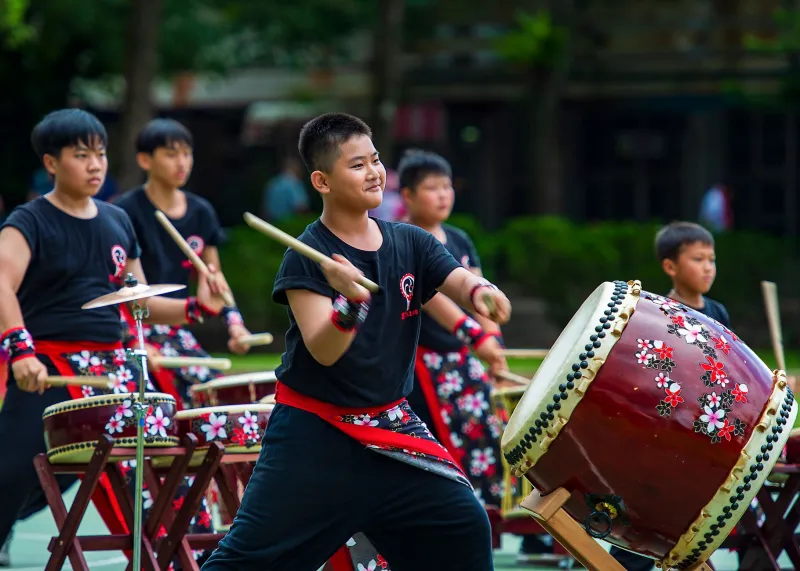
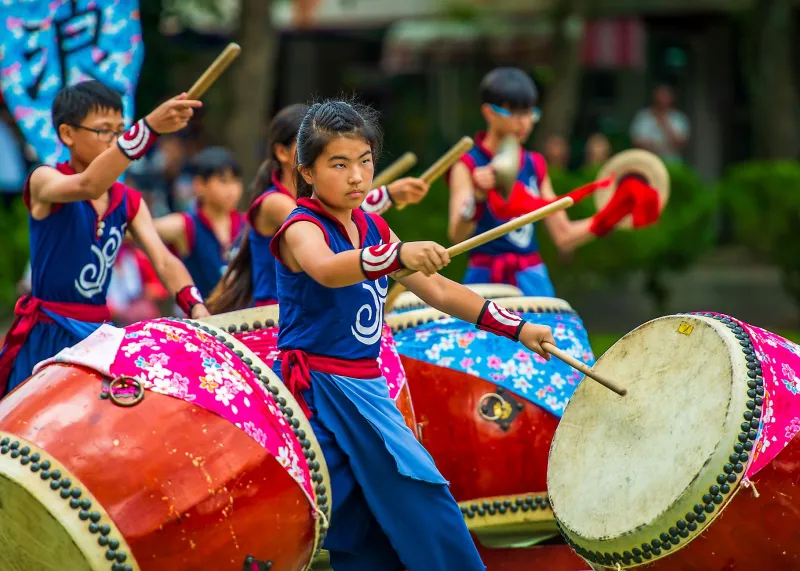
To understand why taiko and somatic practices pair so naturally, it helps to consider what happens in the body during a drum strike. The physical engagement is total: the arms extend, the core stabilizes, the legs ground into the earth, and the breath — crucially — must be coordinated with the movement to generate power and prevent injury. Taiko masters have long described this alignment of breath and motion as central to the art. What contemporary wellness practitioners are now recognizing is that this description maps almost precisely onto the foundational principles of yoga and somatic movement therapy.
Dr. Lena Furusawa, a somatic therapist based in the San Francisco Bay Area who has incorporated taiko elements into her clinical practice, explains the connection in more clinical terms. "The nervous system responds to rhythmic, repetitive movement in ways that are measurably calming," she notes. "When you add the proprioceptive demand of striking — the weight, the rebound, the timing — you're asking the body to be extraordinarily present. That presence is, functionally, what mindfulness practice is trying to cultivate."
Research into the therapeutic dimensions of percussion has been accumulating for years, with studies pointing to reductions in cortisol levels, improved mood regulation, and enhanced group cohesion among participants in drum circle programs. The taiko-yoga fusion draws on this body of evidence while adding the specific cultural and aesthetic framework of Japanese percussion — a framework that many practitioners find lends the sessions a gravity and intentionality that generic drum circles can sometimes lack.
What a Session Actually Looks Like
The structure of a hybrid taiko-yoga session varies considerably depending on the instructor's background and emphasis. At Embody Studio, Kinoshita — who trained in both vinyasa yoga and community taiko for over a decade — typically begins with twenty minutes of floor-based movement, guiding participants through a sequence designed to open the hips, shoulders, and thoracic spine. The focus is deliberate: these are precisely the areas most engaged during taiko playing.
From there, participants move to the drums, beginning with slow, sustained strikes timed to extended exhales. "We're not performing," Kinoshita is careful to say. "We're not trying to sound impressive. We're using the drum as a biofeedback tool. You can feel immediately whether your breath is supporting your movement or fighting it."
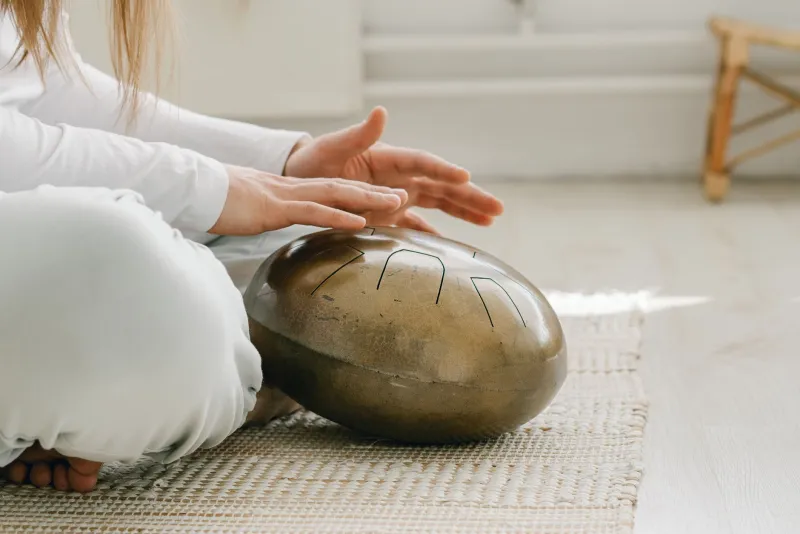
The session builds gradually, incorporating call-and-response patterns that introduce a social dimension without requiring any prior drumming experience. It closes with what Kinoshita calls a "resonance rest" — participants place their hands lightly on the drumhead after a final strike and remain still, feeling the vibration dissipate through their palms.
"That moment," she says, "is when people tend to cry. Not from sadness. From something releasing."
Why Now, and Why Americans
The timing of this fusion's rise is not incidental. American wellness culture has spent the better part of a decade expanding its definition of what counts as meaningful practice. Formats that once existed at the fringes — sound baths, breathwork intensives, cold exposure therapy — have moved into the mainstream as practitioners and consumers alike seek experiences that engage the whole person rather than isolating a single system.
Taiko, with its demand for physical commitment, rhythmic precision, and communal awareness, fits neatly into this expanded understanding. It also offers something that many purely contemplative practices do not: a sense of power. Striking a drum is an act of agency. For participants navigating stress, grief, or the particular exhaustion of modern American life, that agency can feel genuinely transformative.
Jordan Reyes, a software engineer from Austin, Texas, attended his first taiko-yoga session at a wellness retreat in the Hill Country and describes the experience as unlike anything he had encountered in years of conventional gym training and occasional meditation apps. "I've tried to build a mindfulness practice for a long time," he admits. "But my brain doesn't quiet easily. The drum gave it something to do. By the end, I was actually still — not because I forced it, but because I'd used everything up in the best possible way."
Honoring the Tradition Within the Innovation
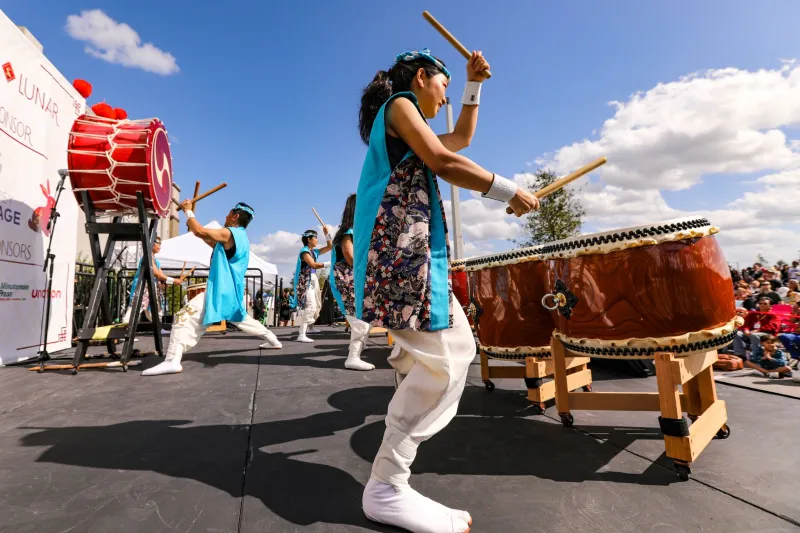
Not everyone in the taiko community greets the wellness fusion with uncomplicated enthusiasm. Some practitioners and scholars raise legitimate questions about the cultural weight of taiko — its roots in Japanese village ritual, its role in Japanese-American community building during and after the incarceration era — and whether that history is adequately honored when the drum becomes a prop in a studio wellness session.
Kinoshita takes these concerns seriously and structures her curriculum accordingly. Every session she leads includes a brief orientation to taiko's history and cultural significance. She collaborates regularly with established taiko ensembles in her region and encourages participants to attend live performances. "The drum deserves context," she says simply. "If I'm asking people to develop a relationship with it, I want that relationship to be informed."
Furusawa echoes this position. "Cultural appreciation and therapeutic application are not mutually exclusive," she argues, "but they require intentionality. The responsibility falls on the instructor to create that intentionality."
A Movement Still Finding Its Form
The taiko-yoga fusion remains a practice in evolution. There is no standardized curriculum, no governing body, and no consensus on terminology — some instructors call it integrative percussion, others speak of somatic taiko, and still others resist any label at all. What exists is a growing network of practitioners who are finding each other through workshops, social media communities, and the kind of word-of-mouth that tends to accompany experiences people struggle to adequately describe.
For those who have felt the drum's resonance move through their hands and into their chest during a moment of deliberate stillness, the appeal requires little explanation. The taiko-yoga connection, it turns out, was always waiting to be made. It simply needed practitioners willing to stand at the intersection and listen.