Drumming at the Schoolhouse Door: Why Taiko Remains a Stranger to American Music Classrooms
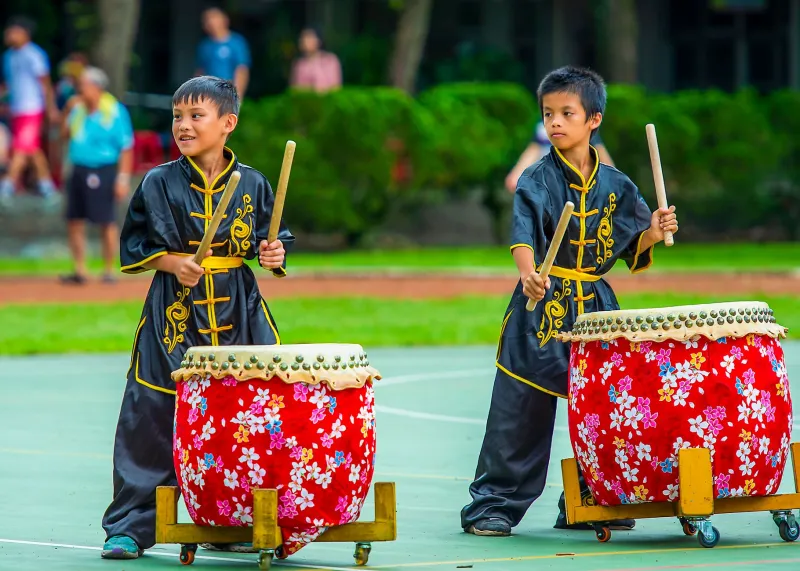
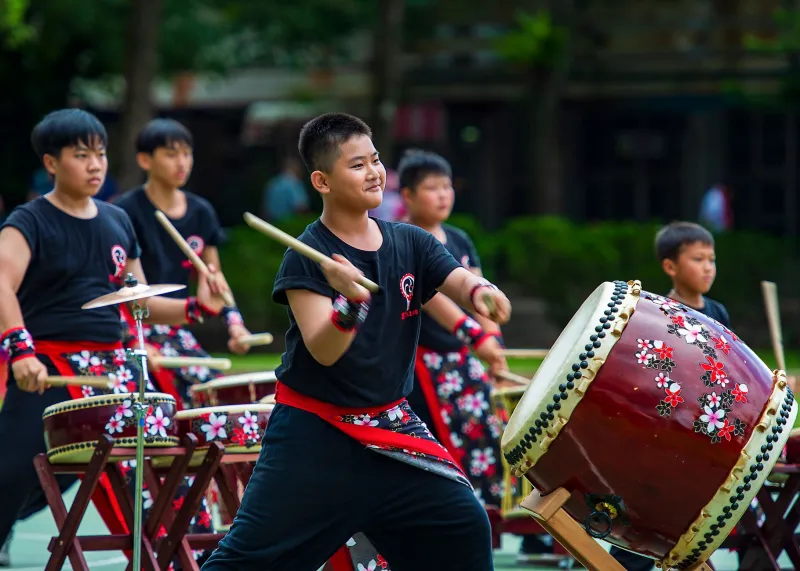
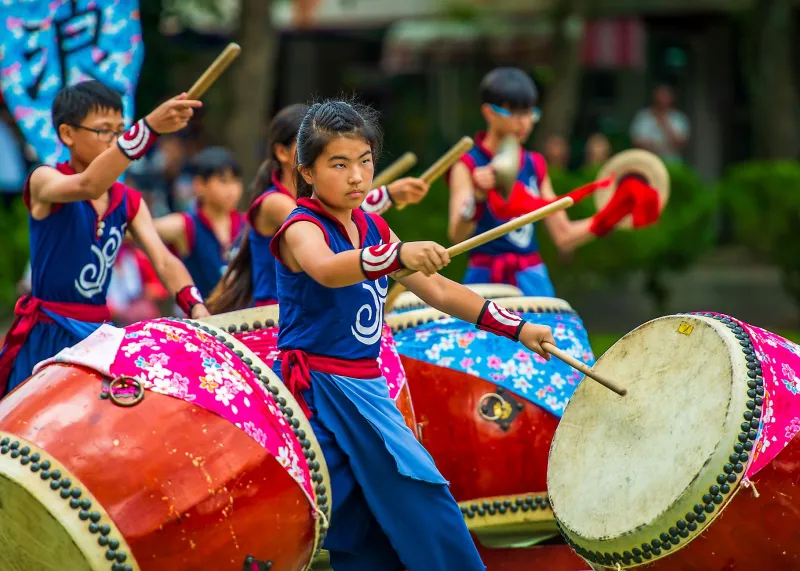
Walk into virtually any American public school music room and the landscape is immediately familiar: rows of black metal music stands, a upright piano against the far wall, perhaps a shelf of snare drums and practice pads. What you will almost certainly not find is a nagado-daiko, a shime-daiko, or any other instrument from the taiko tradition—despite the fact that taiko drumming now counts thousands of active practitioners across the country and draws sold-out audiences from San Francisco to Chicago to Boston.
This absence is not accidental. It is the product of interlocking institutional forces that have long determined which musical traditions receive formal recognition in American schools and which remain perpetually outside the gate.
A Thriving Art Form Without a Classroom
The numbers tell a striking story. Community taiko groups have proliferated steadily since the founding of San Jose Taiko in 1973, and today organizations such as the Taiko Community Alliance estimate that more than two hundred active ensembles operate throughout the United States. University clubs have taken root on campuses from UCLA to the University of Michigan. Workshops sell out within days. Yet the National Association for Music Education's core standards, which effectively set the template for what gets taught in American classrooms, make no specific mention of taiko or any instrument from the Japanese percussion tradition.
For many educators who have watched taiko's grassroots momentum build over decades, the disconnect is both puzzling and deeply frustrating.
"The appetite is absolutely there," says one music educator based in the Seattle metropolitan area who has spent several years advocating for broader percussion inclusion in her district's curriculum. "Students respond to taiko in a way that is almost visceral. The physical engagement, the communal dimension, the sheer sonic power—it reaches young people who have never once been moved by a recorder unit or a basic band arrangement. And yet we keep teaching the same repertoire we taught forty years ago."
The Architecture of Exclusion
Understanding why taiko has been kept at arm's length from formal music education requires examining several overlapping barriers.
The first and most foundational is the Western classical framework that continues to organize American music pedagogy. State music standards, teacher certification programs, and standardized assessments are built almost entirely around European instruments and notation systems. A teacher trained in this tradition may possess genuine enthusiasm for world music traditions but lack the pedagogical tools—or the institutional permission—to incorporate them meaningfully.
The second barrier is economic. Taiko instruments are not inexpensive. A single professional-grade nagado-daiko can cost several thousand dollars. School districts operating under perpetually strained budgets have little incentive to invest in instruments that fall outside established program requirements, particularly when those same budgets are already struggling to maintain aging band and orchestra equipment.
A third obstacle is certification. In most states, music teachers must demonstrate competency in specific instruments and repertoire to receive licensure. Taiko training is not part of any standard certification pathway, which means that even a teacher who is personally accomplished in taiko may face bureaucratic resistance when attempting to introduce it as a formal subject.
Finally, there is the question of assessment. The standardized testing culture that has come to dominate American public education demands measurable outcomes. Taiko's deepest pedagogical value—its cultivation of group awareness, physical presence, and cultural connection—does not translate neatly into the rubrics that school administrators are required to report.
Educators at the Margins, Building at the Roots
Despite these considerable headwinds, a small but tenacious cohort of educators is finding ways to bring taiko into schools, often by working around formal structures rather than through them.
In California, several community taiko organizations have developed artist-in-residence programs that bring trained drummers directly into classrooms for multi-week engagements. These residencies operate through arts education funding streams—often supported by state arts council grants or private foundation dollars—that bypass the standard curriculum approval process. Students in these programs receive genuine taiko instruction, and teachers frequently report that the residency sparks sustained interest that outlasts the final session.
In the Pacific Northwest, a handful of districts have begun incorporating taiko into existing world music or multicultural arts units, framing it as a component of cultural education rather than strictly a music class. This framing, while sometimes limiting in terms of instructional depth, has proven effective at gaining administrative approval in schools where a standalone taiko program would face immediate resistance.
Some advocates are working at the policy level. A coalition of educators and taiko practitioners has been quietly building a case for the inclusion of taiko competencies within state arts standards revisions, arguing that the instrument's documented benefits—improved coordination, enhanced listening skills, demonstrated gains in student engagement, and meaningful entry points into Japanese and Japanese-American history—align directly with existing educational goals.
"We are not asking anyone to abandon what they already teach," says one practitioner involved in these advocacy efforts. "We are asking the system to recognize that musical legitimacy should not be determined solely by European origin. Taiko has a rigorous tradition, a sophisticated technique, and a documented history. It deserves the same serious consideration that any other percussion discipline receives."
What Legitimacy Would Require
For taiko to achieve the kind of institutional standing currently enjoyed by piano or violin in American music education, several things would need to happen in concert.
Teacher preparation programs would need to develop taiko-specific training pathways, or at minimum create robust frameworks for incorporating world percussion traditions into general music pedagogy. State arts standards bodies would need to explicitly name non-Western instruments as valid subjects of formal study. Instrument lending programs and subsidized purchasing initiatives—similar to those that have helped expand access to orchestral instruments in under-resourced schools—would need to be extended to taiko.
Perhaps most importantly, the field would benefit from a coherent, nationally accessible curriculum framework: a structured sequence of skills, cultural context, and repertoire that classroom teachers could adopt with confidence, even if they are not themselves accomplished taiko players.
Some of this work is already underway. Organizations such as the Taiko Community Alliance have invested in educational resource development, and a growing number of university music education programs are beginning to address world percussion traditions with greater seriousness. But the distance between where the field currently stands and where it would need to be for taiko to enter the mainstream of American music education remains substantial.
A Door Worth Opening
There is something quietly significant about the fact that taiko continues to thrive in the United States entirely on the strength of community commitment, without the institutional scaffolding that sustains so many other musical traditions. It speaks to the art form's intrinsic power and to the dedication of the practitioners who have carried it forward across generations.
But community resilience should not be confused with institutional equity. A young student in rural Ohio or suburban Georgia deserves the same opportunity to encounter taiko that a student in the San Francisco Bay Area might find through a well-established community program. That kind of access requires schools.
The conversation about taiko's place in American music education is no longer a fringe discussion. It is a serious pedagogical question, and it deserves a serious institutional answer.